
Short Answer
Overview
Piemontite is the manganese‑rich member of the epidote group, a sorosilicate mineral whose formula is commonly expressed as Ca₂Mn₂⁺Al₂Si₃O₁₂(OH). Iron can substitute for manganese, giving a range of colour intensity. Crystals belong to the monoclinic system and typically appear as prismatic or tabular aggregates.
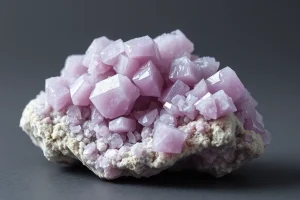
The gemstone is noted for its vivid pink to deep reddish‑purple colour, a vitreous to sub‑adamantine luster, and a Mohs hardness of 6–6.5. Its specific gravity lies between 3.5 and 3.6, and it exhibits perfect cleavage on the {001} plane, with a distinct secondary cleavage on {100}. Transparency varies from transparent to translucent, and the streak is white.
History and Origin
The name “piemontite” originates from the Piedmont region of north‑western Italy, where the mineral was first described in 1868. Early collectors valued it for decorative inlays and cameos rather than as a gemstone. In the late 20th century, increased interest in coloured silicates led to its adoption in fine jewellery.
Significant localities include:
- Italy – Piedmont and Lombardy
- Canada – Ontario (particularly the Bancroft area)
- United States – California, especially the San Juan Mountains
- Russia – Ural Mountains
- Namibia – Otavi region
- Madagascar – Antsiranana Province
- Australia – Western Australia, Yilgarn Craton
These deposits form in metamorphic rocks such as schist and gneiss, where manganese‑rich fluids interact with calcium‑aluminium silicates during regional metamorphism.
Meaning and Symbolism
Traditional gemstone lore associates the pink‑purple hue of piemontite with love, compassion, and emotional balance. It is thought to encourage honest communication, self‑acceptance, and the expression of heartfelt feelings. Because the stone is relatively uncommon, it is also regarded as a symbol of individuality and personal distinction.
Healing and Metaphysical Properties
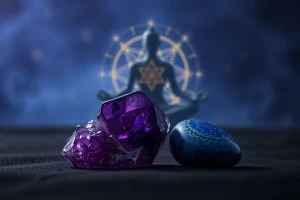
Within crystal‑healing traditions, piemontite is linked to the Heart (Anahata) chakra. Practitioners claim it can:
- Promote emotional openness and forgiveness.
- Calm anxiety and stress during challenging situations.
- Stimulate creative intuition and imagination.
- Support circulatory and respiratory vitality (as a metaphysical belief).
These properties are part of cultural and spiritual practice and should not be taken as medical advice.
Varieties and Types
Piemontite is most often encountered in its natural, untreated state. Recognised variations include:
- Natural pink piemontite – untreated stone with classic pink‑purple colour.
- Heat‑treated piemontite – occasional controlled heating intensifies colour; reputable dealers disclose such treatment.
- Pink epidote – a closely related mineral with lower manganese content, sometimes marketed under the same name.
Because colour and clarity can vary, a gem‑ological report confirming identity and any treatments is advisable.
Jewelry Uses and Care
The combination of attractive colour and a hardness of 6–6.5 makes piemontite suitable for rings, pendants, earrings, and brooches. However, its perfect {001} cleavage makes it vulnerable to chipping, so protective settings—such as bezel, channel, or closed‑back designs—are recommended.
Cleaning: Gently wash with lukewarm water, a mild detergent, and a soft brush. Avoid ultrasonic or steam cleaners, especially for heat‑treated stones, as rapid temperature changes can cause micro‑fractures.
Storage: Keep piemontite separate from harder gemstones (e.g., diamonds, sapphires) to prevent scratching. Store in a soft pouch or a fabric‑lined compartment.
Buying Guide
When selecting piemontite, evaluate the following criteria:
- Colour intensity – Deep, even pink‑purple hues without brown or green overtones command the highest value.
- Clarity – Inclusions are common; those that do not impair transparency are acceptable.
- Cut and setting – A skillful cut maximises colour and protects the stone’s cleavage.
- Origin – Specimens from classic localities such as Piedmont or Ontario are often more sought after.
- Certification – A report from GIA, IGI, or another reputable laboratory confirms authenticity and notes any treatments.
Prices range from modest for small, lower‑quality stones to premium for large, vivid, untreated specimens. Purchase only from dealers who provide clear return policies and provenance documentation.
FAQ
What is piemontite good for?
Piemontite is valued for its striking pink‑purple colour in jewellery and as a collector’s mineral. Traditionally it is believed to promote emotional balance and heart‑chakra activation, though these are metaphysical concepts, not medical facts.
Is piemontite rare?
High‑quality, vivid pink piemontite is relatively rare, especially in larger sizes and untreated form. While the mineral occurs in several countries, fine gemstone material is limited compared with more abundant gems like quartz.
How can you tell if piemontite is real?
Authentic piemontite shows a monoclinic crystal habit, perfect {001} cleavage, and a refractive index around 1.73‑1.75. A gem‑ological report, microscopic examination, and, when needed, spectroscopic testing can confirm identity and reveal any heat treatment.
What chakra is piemontite associated with?
In crystal‑healing traditions, piemontite is most often linked to the Heart (Anahata) chakra, supporting love, compassion, and emotional openness.
How should you clean piemontite?
Clean piemontite with lukewarm water, a mild detergent, and a soft brush. Avoid ultrasonic or steam cleaners and sudden temperature changes. Store separately from harder gemstones to prevent scratches.
Leave a Reply