
Short Answer
Alkaline igneous complexes are specialized geological environments characterized by an enrichment in alkali metals—specifically sodium and potassium—and a relative depletion of silica. These unique magmatic systems act as chemical laboratories, producing a suite of exotic minerals that are rarely found in standard granitic or basaltic rocks. For the gemologist and collector, these complexes are the primary sources of some of the most visually striking and chemically complex rare gemstones.
Definition
An Alkaline Igneous Complex is a body of intrusive igneous rock formed from magma that is undersaturated in silica. Unlike common igneous rocks, these complexes are enriched in alkali elements (Na, K) and often contain incompatible elements such as zirconium, niobium, and rare earth elements (REE). These conditions allow for the crystallization of minerals that would be unstable in more common geological settings.
Plain-English Explanation
Imagine a standard volcano as a kitchen making a basic bread (common igneous rock). An alkaline complex is like a gourmet kitchen using very specific, rare ingredients—extra salts and minerals—that create a completely different kind of pastry. Because the “recipe” of the magma is so unusual, it creates crystals that don’t appear anywhere else in nature. These crystals often have vivid colors and strange chemical structures, making them highly prized by gemstone collectors.
Example
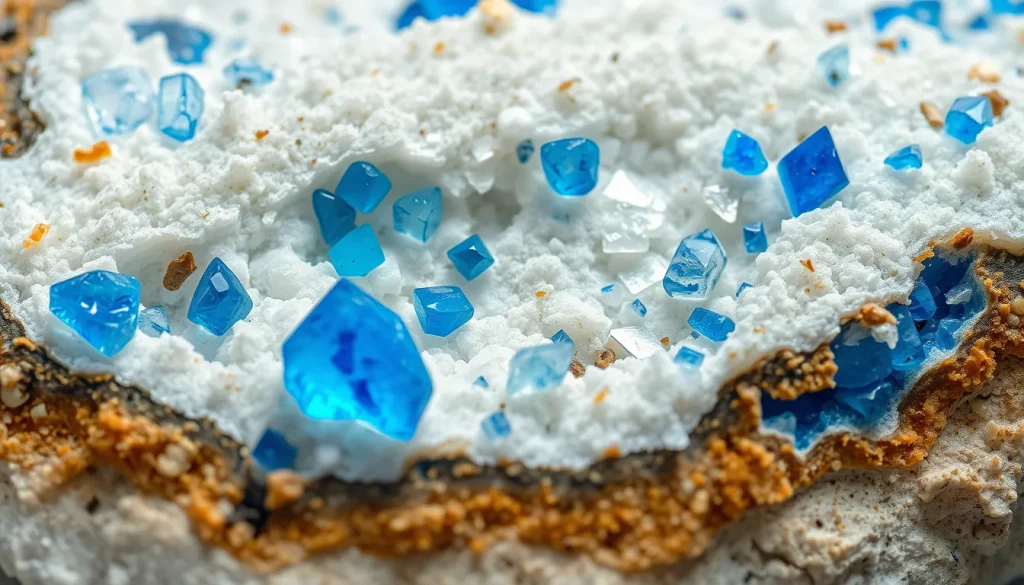
One of the most iconic examples of minerals from these complexes is Sodalite. Found in alkaline syenites, sodalite is a rich blue mineral that only forms under the specific pressure and chemical conditions found in these alkali-rich environments. Another example is Euclase, which often occurs in the hydrothermal veins associated with these complexes, appearing as rare, crystal-clear, pale blue gemstones.
Why It Matters
Understanding alkaline complexes is critical for three primary reasons:
- Predictive Prospecting: Knowing the mineral assemblage of an alkaline complex allows geologists to predict where other rare minerals might be found.
- Identification: Many rare gemstones from these environments have overlapping visual properties; knowing their geological origin helps in narrowing down the identification.
- Market Value: Because these complexes are geographically limited (found in specific locations like the Kola Peninsula or the Mont Saint-Hilaire), the gemstones they produce are inherently rare, driving higher value for collectors.
Expert Tip: When examining specimens from alkaline complexes, always look for associated minerals like nepheline or leucite. Their presence confirms the alkaline nature of the host rock and provides a strong clue to the identity of the primary gemstone.
FAQ
Are alkaline complex gemstones suitable for jewelry?
It depends on the mineral. While some are hard enough, many alkaline minerals (like sodalite) are softer and better suited for collector specimens or cabochons rather than faceted rings.
Where are these complexes usually found?
They are found in continental rift zones or within stable continental plates, such as in Canada, Russia, and parts of Africa.
What is the main difference between a granite and an alkaline rock?
Granite is silica-saturated (contains quartz), whereas alkaline rocks are silica-undersaturated (contain no quartz but often contain feldspathoids).

Leave a Reply