
Short Answer
Overview
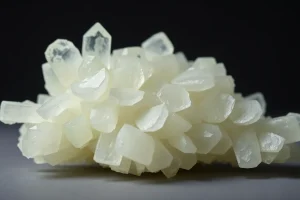
Hurlbutite is a rare hydrated calcium‑zinc arsenate mineral that typically occurs as tiny, delicate crystals ranging from completely colorless to a very light, buttery yellow. Its modest hardness of 4.5–5 on the Mohs scale and a vitreous‑to‑pearly luster give it a subtle, glassy appearance that is prized more by mineral collectors than by mainstream jewelers.
History and Origin
The name “hurlbutite” honors the American gemologist and crystallographer George Hurlbut, whose work in the early‑mid‑20th century advanced the study of arsenate minerals. The species was first described in 1955 after specimens were recovered from oxidized zones of zinc‑lead ore deposits in the Arizona Mogollon Rim, United States. Subsequent occurrences have been documented in the Tsumeb district of Namibia, as well as isolated localities in Morocco and the Czech Republic where arsenic‑rich hydrothermal fluids interacted with calcium‑ and zinc‑bearing host rocks.
Meaning and Symbolism
Because hurlbutite has not been used historically in adornment or cultural rituals, it lacks a deep traditional symbolism. In modern collector circles the stone is often associated with discovery, curiosity, and an appreciation for subtle natural beauty. Its gentle pale‑yellow hue is sometimes linked metaphorically to clarity of thought and quiet confidence.
Healing and Metaphysical Properties
Within crystal‑healing and metaphysical traditions, hurlbutite is believed to support mental clarity, aid in releasing outdated patterns, and balance the energy between the Root and Crown chakras. Practitioners claim it can foster both grounded stability and spiritual insight. These properties are based on traditional beliefs and should not be interpreted as medical advice.
Varieties and Types
Hurlbutite is chemically uniform, but trace‑element substitution can produce slight variations in color and optical properties. Specimens containing minor amounts of iron or manganese may display a deeper yellow or faint brownish tint. Crystallographically, the mineral belongs to the monoclinic system and most commonly forms well‑developed prisms, elongate blades, or radiating aggregates. Some crystals exhibit a pseudo‑orthorhombic habit due to twinning.
Jewelry Uses and Care
Because of its relatively low hardness and perfect cleavage on one plane, hurlbutite is unsuitable for everyday wear. When incorporated into jewelry, it is typically set in protective bezels, tension settings, or as a pendant that is kept away from hard surfaces. The following care guidelines are recommended:
- Avoid contact with harder gemstones such as quartz, topaz, or diamond.
- Do not expose the stone to ultrasonic cleaners, steam, or harsh chemicals.
- Clean gently with lukewarm soapy water and a soft, lint‑free cloth; dry thoroughly before storage.
- Store separately in a soft pouch or a compartment lined with felt to prevent scratching.
Buying Guide
When acquiring hurlbutite, collectors and occasional jewelry designers should consider several key factors to ensure quality and authenticity.
- Color and Clarity: Prefer specimens that are uniformly pale yellow or completely colorless with minimal inclusions.
- Crystal Form: Well‑developed prisms, elongated blades, or radiating clusters are more valuable.
- Origin Documentation: Reputable dealers should provide locality information and, when possible, a gemological report confirming the mineral’s identity.
- Treatment Disclosure: Authentic hurlbutite is rarely treated; any heat, coating, or impregnation should be fully disclosed.
- Price Expectations: As a collector’s mineral, prices are modest but can rise for exceptional crystal size, clarity, or provenance.
FAQ
What is hurlbutite good for?
Hurlbutite is prized by collectors for its rarity and delicate crystal habit. In crystal‑healing traditions it is associated with mental clarity and grounding, though it has no proven medical benefits.
Is hurlbutite rare?
Yes, hurlbutite is considered rare. High‑quality specimens with well‑formed crystals are limited to a few localities, making them uncommon in the market.
How can you tell if hurlbutite is real?
Authentic hurlbutite shows a pale yellow to colorless hue, a Mohs hardness of 4.5–5, vitreous‑pearly luster, and a white streak. Professional verification using X‑ray diffraction or a gemological microscope is recommended for certainty.
What chakra is hurlbutite associated with?
In crystal‑healing circles hurlbutite is sometimes linked to the Root and Crown chakras, though no single standard association exists.
How should you clean hurlbutite?
Clean gently with lukewarm soapy water and a soft lint‑free cloth. Avoid ultrasonic cleaners, steam, and harsh chemicals, as the stone is relatively soft and can be damaged by aggressive cleaning methods.
Leave a Reply