
Short Answer
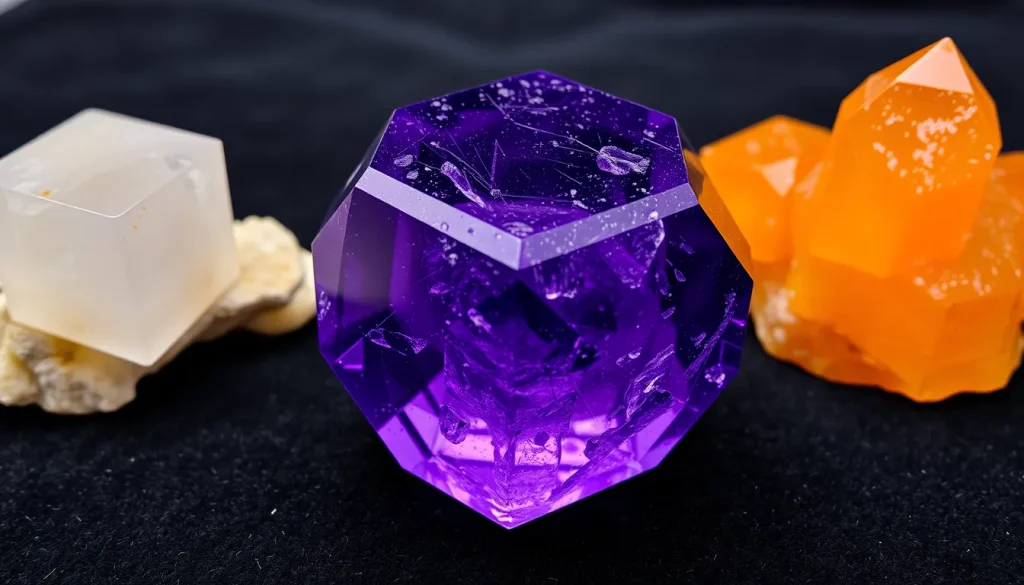
Halide minerals represent a distinct and chemically fascinating group of minerals defined by the presence of a halogen element (Fluorine, Chlorine, Bromine, or Iodine) combined with a metal. While many are known primarily as industrial salts, several species exhibit the transparency, color, and crystalline structure necessary to be classified as gemstones or high-value mineral specimens.
What Is a Halide Mineral?
In gemology, a halide is a mineral composed of a halogen atom and a metallic element. The most common halogens found in gemstones are fluorine and chlorine. These minerals typically form in hydrothermal veins, evaporite deposits (where saltwater evaporates), or as secondary minerals in volcanic environments.
The chemical bonding in halides is predominantly ionic, which results in crystals that are often highly symmetric—most notably cubic—and possess a distinct vitreous to adamantine luster. However, this same bonding structure makes them significantly softer and more soluble than the silicates or oxides that make up the majority of the gemstone world.
Varieties and Related Materials
The halide family is diverse, ranging from the commercially popular to the extremely rare. The following are the most significant gemstone-quality halides:
- Fluorite (CaF2): The most famous halide, known for its incredible array of colors and perfect octahedral cleavage.
- Sylvite (KCl): A potassium chloride mineral that often appears in orange, red, or colorless crystals.
- Halite (NaCl): Common rock salt, which can occur in stunning transparent, blue, or purple crystals in nature.
- Cryolite (Na3AlF6): A rare fluorine-bearing mineral, historically significant for its use in aluminum production.
Identification and Look-Alikes
Identifying halide minerals requires caution due to their softness. A key diagnostic feature for many halides is their cleavage; for example, fluorite exhibits perfect octahedral cleavage, while halite and sylvite exhibit perfect cubic cleavage.
| Feature | Fluorite | Halite | Sylvite |
|---|---|---|---|
| Hardness (Mohs) | 4 | 2 – 2.5 | 2 |
| Crystal System | Isometric | Isometric | Isometric |
| Common Colors | Purple, Green, Yellow | Clear, Blue, Pink | Orange, Red, Clear |
| Solubility | Low | High | High |
Expert Tip: Never use water to clean a suspected halide specimen. Halite and Sylvite are highly soluble and will dissolve, while Fluorite can be damaged by certain chemical cleaners.
Jewelry Suitability and Care
From a professional gemological standpoint, most halide minerals are not suitable for traditional jewelry. Their low Mohs hardness (typically between 2 and 4) means they are easily scratched by everyday dust (which contains quartz) and can be crushed under pressure.
Practical Limitations:
- Durability: Too soft for rings or bracelets; best suited for earrings or pendants if protected.
- Stability: Many halides are hygroscopic, meaning they absorb moisture from the air, which can lead to surface degradation.
- Cleavage: Their perfect cleavage makes them prone to splitting if bumped or dropped.
Care Instructions:
- Store in airtight, padded containers to prevent moisture absorption.
- Avoid all liquid cleaners; use a soft, dry microfiber cloth for dusting.
- Keep away from heat sources, as some halides can dehydrate or change color.
Quality and Value Factors
For collectors, the value of halide minerals is driven by crystallinity and color saturation. Unlike diamonds or rubies, where clarity is paramount, halide specimens are valued for their geometric perfection.
- Crystal Habit: Well-formed cubes or octahedrons command the highest prices.
- Color Zoning: Multi-colored crystals (e.g., “Rainbow Fluorite”) are highly prized.
- Transparency: While many halides are opaque, gem-quality transparency significantly increases rarity.
FAQ
Can I wear fluorite jewelry every day?
It is not recommended. Fluorite has a Mohs hardness of 4, meaning it will scratch easily. It is best reserved for occasional wear in protected settings.
Why does some salt (halite) look blue or purple?
The colors in halite are often caused by structural defects in the crystal lattice or the presence of trace impurities and radiation.
How do I tell the difference between fluorite and calcite?
While both are soft, fluorite typically has octahedral cleavage, whereas calcite has rhombohedral cleavage and reacts (effervesces) with dilute hydrochloric acid.
Leave a Reply