
Short Answer
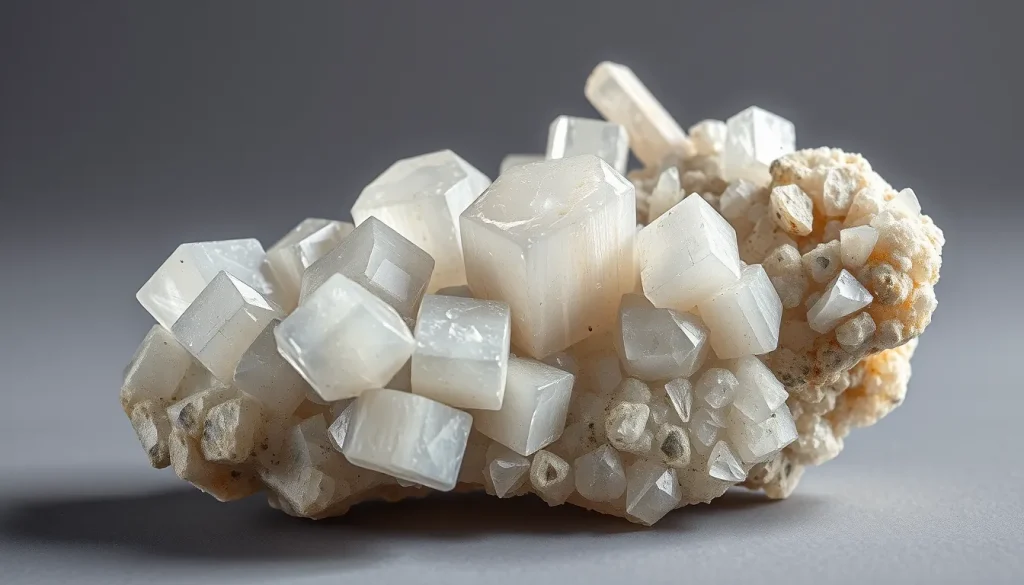
Orthoclase is a cornerstone of the mineral world, serving as one of the most abundant minerals in the Earth’s continental crust. As a potassium feldspar, it is prized not only for its geological significance but also for its aesthetic appeal in specific crystalline forms and varieties. While often overshadowed by more famous gemstones, orthoclase provides essential insights into the cooling history of igneous rocks and offers a unique luster and color palette for collectors.
What Is Orthoclase?
Orthoclase is a potassium aluminum silicate mineral with the chemical formula KAlSi3O8. It belongs to the feldspar group, the largest group of rock-forming minerals. In the gemological context, orthoclase is characterized by its monoclinic crystal system and its tendency to form blocky, prismatic crystals.
While pure orthoclase is often white to grey, impurities and structural variations lead to a spectrum of colors, including pink, orange, and cream. It is closely related to microcline and sanidine, which together form the potassium feldspar series, differing primarily in their internal atomic arrangement (symmetry) and the temperatures at which they crystallize.
Practical Uses and Limitations
Due to its physical properties, orthoclase is utilized in various industries and artistic applications:
- Ceramics and Glass: Because it melts at a relatively low temperature, it is a primary ingredient in the manufacture of porcelain and glass.
- Ornamental Carving: High-quality, colorless or pink specimens are occasionally carved into figurines or used as decorative inlays.
- Geological Dating: Orthoclase is critical for K-Ar (potassium-argon) dating, allowing geologists to determine the age of volcanic rocks.
Gemologist’s Tip: Orthoclase is rarely used in high-end faceted jewelry because of its perfect cleavage in two directions, which makes it prone to splitting if hit at the wrong angle.
Varieties and Related Materials
Orthoclase often appears in different forms or is confused with its siblings in the feldspar family:
Adularia
A variety of orthoclase (or more accurately, a mixture of orthoclase and albite) that exhibits adularescence—a ghostly, shimmering light that moves across the surface of the stone. This is most famous in Moonstone.
Amazonite
While often categorized separately, the blue-green hue of amazonite is caused by lead and water within the microcline/orthoclase structure, creating a highly sought-after collector’s stone.
Identification and Look-Alikes
Identifying orthoclase requires a combination of visual inspection and physical testing. The most defining characteristic is its perfect cleavage on one plane and good cleavage on another, typically meeting at nearly 90 degrees.
| Property | Orthoclase Value | Comparison (Quartz) |
|---|---|---|
| Hardness (Mohs) | 6.0 | 7.0 |
| Cleavage | Two directions (Perfect/Good) | No cleavage (Conchoidal fracture) |
| Luster | Vitreous to Pearly | Vitreous |
| Specific Gravity | ~2.55 – 2.63 | ~2.65 |
To distinguish orthoclase from quartz, a gemologist looks for the cleavage planes. Quartz will shatter like glass (conchoidal), whereas orthoclase will break along flat, stair-step surfaces.
Jewelry Suitability and Care
Orthoclase is considered a soft-to-medium hardness gemstone. While suitable for earrings or pendants, it is not recommended for rings where it may be exposed to daily impacts.
- Cleaning: Use warm, soapy water and a soft brush. Avoid ultrasonic cleaners if the specimen has internal fractures.
- Storage: Store orthoclase separately from harder gems like diamonds or sapphires to prevent surface scratching.
- Chemical Sensitivity: Avoid exposure to strong acids, which can etch the surface of the mineral.
Symbolism and Modern Beliefs
In metaphysical circles, orthoclase is often associated with stability and grounding. Because of its abundance in the Earth’s crust, it is seen as a stone of connection to the physical world. It is believed by some to help the wearer organize their thoughts and bring a sense of order to chaotic situations, mirroring the structured, blocky nature of its crystal growth.
FAQ
Is orthoclase the same as moonstone?
Moonstone is a variety of feldspar that can include orthoclase, but it is specifically defined by its adularescent optical effect, which is caused by the layering of different feldspar types.
How can I tell orthoclase apart from quartz?
The easiest way is to check for cleavage. Orthoclase has distinct flat cleavage planes, whereas quartz has no cleavage and exhibits conchoidal (shell-like) fractures.
Is orthoclase a precious gemstone?
No, orthoclase is generally considered a semi-precious or common mineral due to its abundance and relative softness compared to precious stones like rubies or diamonds.
Leave a Reply