
Short Answer
Arsenopyrite is a prominent metallic sulfide mineral that frequently occurs in hydrothermal veins and is often associated with other sulfide minerals like pyrite and chalcopyrite. While not used as a gemstone in the traditional sense due to its brittleness and chemical composition, it is a highly valued mineral specimen for collectors and a critical ore for the extraction of arsenic.
What Is Arsenopyrite?
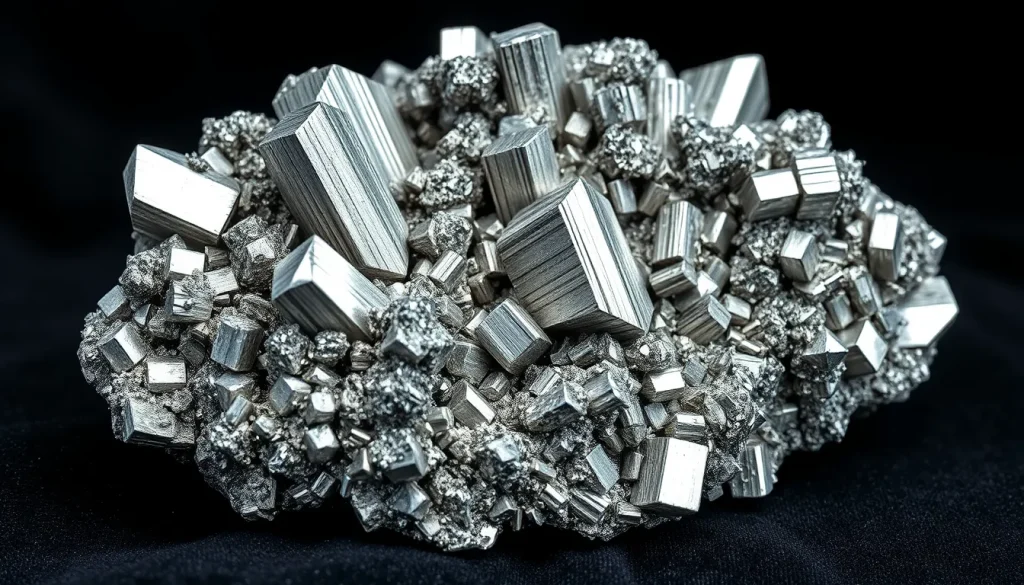
Arsenopyrite is a complex sulfide mineral with the chemical formula FeAsS (Iron Arsenic Sulfide). It is characterized by its metallic luster and a distinct silver-white to steel-grey color. In the mineralogical world, it is often mistaken for pyrite, but it differs significantly in its chemical makeup and physical properties.
The mineral typically forms in monoclinic crystals, often appearing as prismatic or tabular shapes with deep striations. Because it contains arsenic, it is a primary source of this element for industrial applications, although it requires careful handling during extraction and processing.
Identification and Look-Alikes
Distinguishing arsenopyrite from other metallic minerals is a fundamental skill for mineralogists. The most common look-alike is Pyrite (Fool’s Gold), but there are several key markers for differentiation:
- Color: Arsenopyrite is silver-white or steel-grey, whereas pyrite is typically brass-yellow.
- Streak: Arsenopyrite leaves a black to brownish-black streak on a porcelain plate.
- Odor: When struck or heated, arsenopyrite emits a distinct, garlic-like odor due to the release of arsenic vapors.
- Hardness: It ranks between 5.5 and 6 on the Mohs scale, making it slightly softer than pyrite (6-6.5).
Practical Uses and Limitations
Due to its chemical instability and toxicity, arsenopyrite is not suitable for jewelry. However, it serves several practical and scientific purposes:
Industrial Applications
The primary use of arsenopyrite is as an ore for arsenic. Arsenic is used in the production of semiconductors, alloys, and certain pesticides. It is also a common accessory mineral in gold deposits; during the smelting process, arsenopyrite is often processed to recover associated gold.
Collector Specimens
In the mineral collecting community, well-formed crystals of arsenopyrite are highly prized. Specimens with sharp edges and high metallic luster are particularly desirable for museum displays and private collections.
Expert Tip: Always handle arsenopyrite with care. While the mineral is stable in its solid form, avoid inhaling dust from the mineral or heating it in an unventilated area, as arsenic fumes are highly toxic.
Quality and Value Factors
For collectors, the value of an arsenopyrite specimen is determined by several specific criteria:
| Factor | High Value Characteristics | Low Value Characteristics |
|---|---|---|
| Crystal Habit | Large, well-defined prismatic crystals | Massive or granular form |
| Luster | Bright, mirror-like metallic sheen | Dull or tarnished surface |
| Association | Intergrown with quartz or gold | Isolated or fragmented pieces |
| Integrity | Lack of cleavage fractures | Heavily chipped or weathered |
Symbolism and Modern Beliefs
In the realm of metaphysical beliefs, arsenopyrite is often associated with grounding and protection. Practitioners believe it helps in clearing negative energy and strengthening the wearer’s resolve. However, from a scientific perspective, these claims are not supported by empirical evidence, and the toxicity of arsenic remains a primary safety concern regarding prolonged skin contact or ingestion.
FAQ
Is arsenopyrite toxic to touch?
In its solid, crystalline form, it is generally safe to handle briefly. However, it should not be crushed, sanded, or heated, as this can release toxic arsenic dust or fumes.
How can I tell arsenopyrite apart from pyrite?
The easiest way is by color; arsenopyrite is silver-white/grey, while pyrite is brass-yellow. Additionally, arsenopyrite smells like garlic when struck or heated.
Can arsenopyrite be used in jewelry?
No, it is not recommended for jewelry due to its brittleness and the presence of arsenic, which can be irritating to the skin for some individuals.
Leave a Reply