
Short Answer
Nickel-based minerals represent a specialized niche in the world of gemology, bridging the gap between industrial metallurgy and aesthetic mineralogy. While nickel is primarily known as a critical metal for stainless steel and batteries, it forms a variety of rare, visually striking minerals that are highly prized by collectors and specialized jewelers for their metallic luster and unique color palettes.
What Is a Nickel-Based Mineral?
Nickel-based minerals are chemical compounds where nickel (Ni) serves as a primary metallic element. In the context of gemstones, these are typically sulfides or arsenides, though nickel often appears as a trace element (chromophore) in other minerals, such as olivine or garnets, providing them with vivid green hues.
Pure nickel minerals are characterized by their high density, metallic luster, and often an opaque to translucent appearance. The most sought-after for their aesthetic value are those that exhibit crystalline structures rather than massive ores.
Varieties and Related Materials
Nickel occurs in several forms that are relevant to the gemstone and mineral collector. These can be categorized by their chemical bonding:
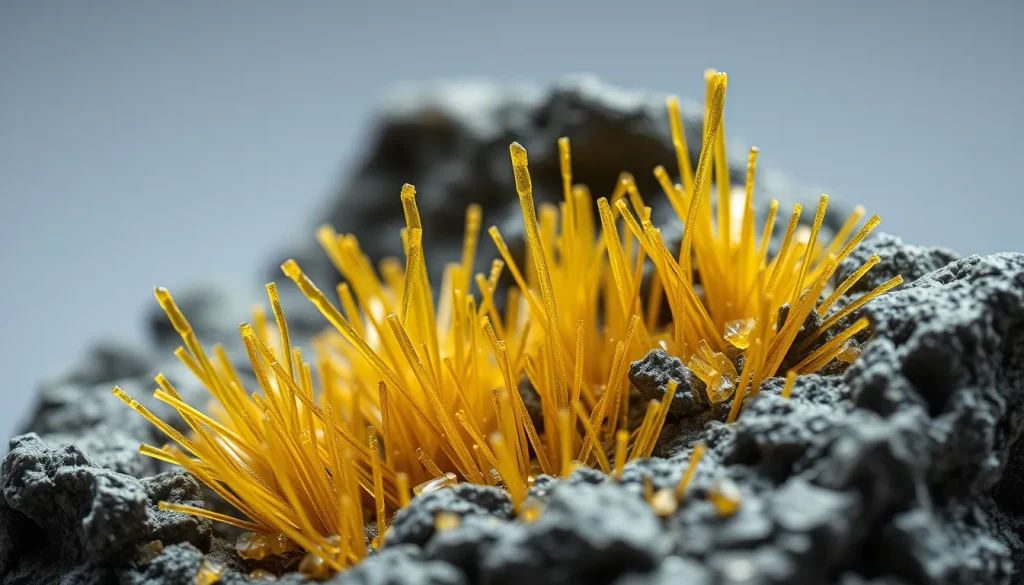
- Nickel Sulfides: The most common group, including minerals like Millerite (NiS), which forms beautiful needle-like crystals with a brassy yellow color.
- Nickel Arsenides: Rare minerals such as Nickeline (NiAs), which appear as metallic, silver-grey crystals.
- Nickel-Bearing Silicates: While not “nickel minerals” in the pure sense, minerals like Gashforite or certain varieties of Peridot (olivine) owe their color to nickel substitution.
Identification and Look-Alikes
Identifying nickel minerals requires a combination of visual inspection and physical testing, as many metallic minerals look similar to the untrained eye.
| Mineral | Visual Characteristic | Key Distinguisher |
|---|---|---|
| Millerite | Brassy yellow, acicular | Higher luster than Pyrite; needle clusters |
| Nickeline | Silver-white to grey | Distinctive metallic streak; high density |
| Pyrite | Pale brass yellow | Cubic crystals; different chemical composition |
Jewelry Suitability and Care
Most nickel-based minerals are not suitable for traditional jewelry due to their physical properties. They are generally soft (low Mohs hardness) and prone to oxidation.
Expert Tip: Because nickel is a common allergen, minerals with high nickel content should be used with caution in jewelry that makes direct skin contact, especially if the mineral is porous or prone to leaching.
For those wishing to preserve these specimens, the following care guidelines are recommended:
- Avoid Moisture: Keep specimens in low-humidity environments to prevent tarnishing.
- No Chemical Cleaners: Avoid acids or ultrasonic cleaners, which can react with the metallic bonds.
- Protective Coating: Professional collectors often apply a microcrystalline wax to prevent oxidation of the surface.
Quality and Value Factors
The value of nickel-based minerals is driven primarily by crystallinity and rarity rather than carat weight. Collectors look for:
- Crystal Habit: Well-defined acicular (needle) or prismatic crystals are significantly more valuable than massive forms.
- Luster: A bright, untarnished metallic sheen is preferred.
- Association: Specimens found in association with other rare minerals on a matrix are highly coveted.
FAQ
Can nickel minerals be used in rings?
Generally no, due to their low hardness and the high likelihood of causing nickel allergies in the wearer.
What is the difference between Millerite and Pyrite?
While both are brassy, Millerite is a nickel sulfide often forming needles, whereas Pyrite is an iron sulfide typically forming cubes.
Are nickel minerals expensive?
Common ore is cheap, but high-quality, well-formed crystals are rare and can be expensive for mineral collectors.
Leave a Reply