
Short Answer
Direct Answer
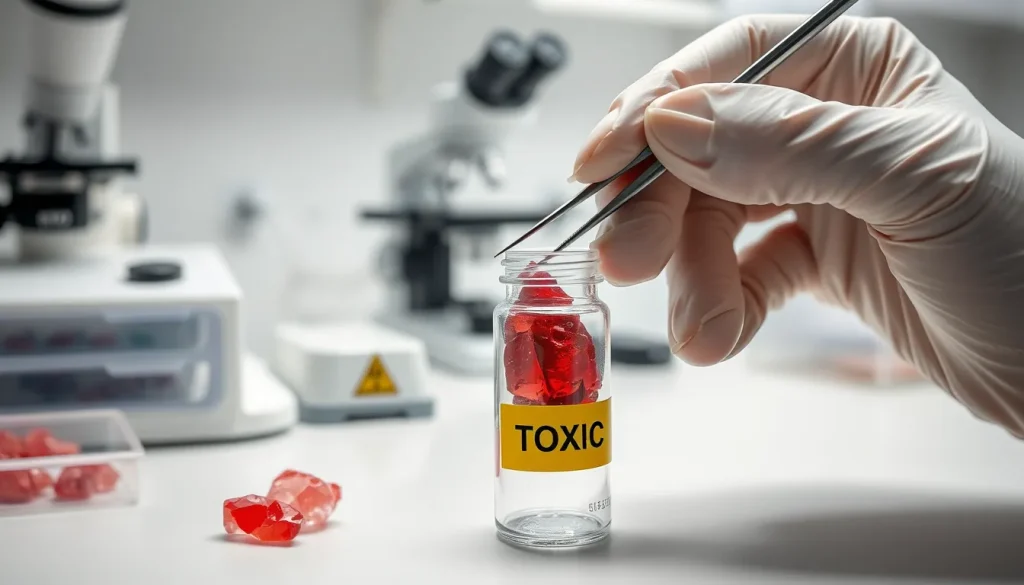
Safely handling and storing toxic gemstones requires a combination of Personal Protective Equipment (PPE), strict hygiene protocols, and specialized containment. The primary goal is to prevent the ingestion, inhalation, or dermal absorption of hazardous elements—such as arsenic, mercury, lead, or beryllium—which may be present in the gemstone’s chemical structure or as surface contaminants.
Professional gemologists treat toxic minerals not as jewelry, but as chemical specimens until they are professionally stabilized or encased in a permanent setting.
Relevant Conditions
Toxicity in gemstones typically manifests in three ways, each requiring different caution levels:
- Soluble Toxins: Minerals that release hazardous ions when in contact with water or acids (e.g., some arsenates).
- Friable Materials: Gemstones that crumble or produce dust during cutting, polishing, or accidental impact (e.g., Realgar).
- Volatile Components: Minerals that can release toxic gases when heated or exposed to intense light (e.g., Cinnabar releasing mercury vapor).
The risk increases significantly during lapidary work (cutting and polishing) where fine particulate matter becomes airborne, or when using chemical cleaners that may react with the mineral’s composition.
Recommended Steps
1. Personal Protection and Handling
Before touching a known toxic specimen, implement the following safety measures:

- Gloves: Wear powder-free nitrile gloves to prevent skin absorption and avoid contaminating other surfaces.
- Respiratory Protection: If the stone is weathered or friable, use an N95 mask or a professional respirator to avoid inhaling mineral dust.
- Tool Isolation: Use dedicated tweezers and probes for toxic stones. Never use the same tools for toxic and non-toxic gems without a full chemical decontamination.
2. Safe Cleaning Protocols
Avoid aggressive cleaning methods. Follow these guidelines:
- No Ultrasonic Cleaners: The vibrations can cause micro-fractures in unstable toxic minerals, releasing dust.
- Dry Cleaning: Use a soft, dry brush or a microfiber cloth.
- Controlled Wet Cleaning: If water is necessary, use a damp cloth rather than soaking. Ensure all runoff water is disposed of according to local hazardous waste regulations.
3. Secure Storage Solutions
Storage must prioritize containment and labeling to prevent accidental exposure:
| Storage Type | Recommended For | Key Feature |
|---|---|---|
| Airtight Plastic Containers | Cinnabar, Realgar | Prevents vapor escape and dust leakage. |
| Glass Vials with Seals | Small crystals, Arsenopyrite | Clear visibility with a secure physical barrier. |
| Dedicated Cabinets | Large collections | Ventilated areas away from food or living spaces. |
Labeling: Every container must be clearly marked with a “TOXIC” or “HAZARDOUS” warning label, specifying the element (e.g., “Contains Arsenic”).
Exceptions
Not all toxic minerals are dangerous in their raw, polished state. For example, many collectors handle these stones for years without issue because the toxins are locked within the crystal lattice. However, stability is not a guarantee of safety. Changes in humidity, temperature, or light exposure (especially with light-sensitive minerals like Realgar) can cause a stable stone to become unstable and powdery over time.
When to Ask a Professional
Consult a certified gemologist or a hazardous materials expert in the following scenarios:
- Lapidary Intentions: If you plan to cut or polish a toxic stone, you must use a professional-grade wet-saw with a closed-loop filtration system.
- Damage Assessment: If a toxic specimen has shattered or begun to “bloom” (develop a powdery surface).
- Jewelry Conversion: When determining if a toxic stone can be safely set in jewelry (e.g., ensuring the stone is fully encapsulated to prevent skin contact).
FAQ
Can I wear toxic gemstones as jewelry?
Generally, yes, provided the stone is polished and securely set. However, stones that are porous or friable should be avoided. If the stone is known to be highly toxic, a 'closed-back' setting is recommended to prevent the stone from touching the skin.
What should I do if I accidentally break a toxic gemstone?
Immediately evacuate the area to avoid inhaling dust. Use a damp paper towel to carefully wipe up fragments (do not vacuum or sweep, as this disperses dust) and dispose of the materials as hazardous waste.
Are all 'toxic' minerals dangerous to touch?
Not all. Many are only dangerous if ingested or inhaled as dust. However, as a professional precaution, nitrile gloves are always recommended to prevent accidental transfer to the mouth or eyes.



Leave a Reply