Short Answer
Direct Answer
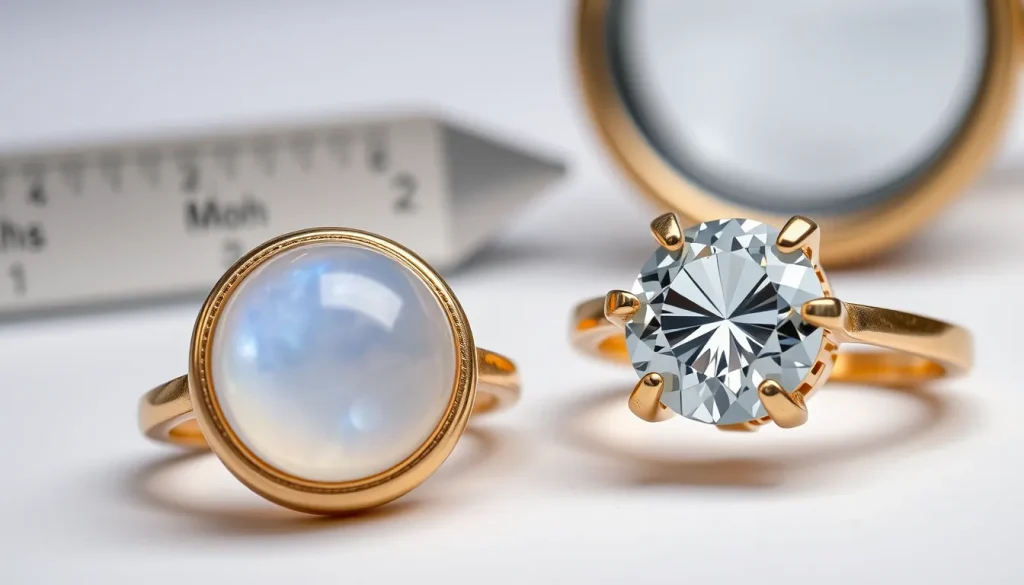
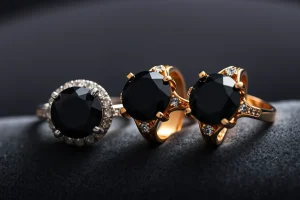
For gemstones with a Mohs hardness of 6 to 6.5—such as Amazonite, Moonstone, and some varieties of Peridot—the primary goal of a setting is to provide maximum physical protection while minimizing pressure on the stone. The most recommended settings are Bezel settings and Protective Prongs (with high coverage). Because these stones are susceptible to surface scratches and impact fractures, settings that shield the girdle and protect the pavilion from direct contact with hard surfaces are essential for long-term durability.
Relevant Conditions
Gemstones in the 6 to 6.5 range occupy a precarious middle ground in gemology. While they are harder than calcite or fluorite, they lack the resilience of quartz (7) or sapphire (9). Several factors determine the urgency of a protective setting:
- Jewelry Type: A ring worn on the dominant hand is subject to constant impact, making a bezel setting almost mandatory. Earrings or pendants are less prone to impact and can accommodate more open settings.
- Cleavage and Fracture: Some stones in this hardness range have distinct cleavage planes (the tendency to split along certain directions), making them prone to cracking if the setting is too tight or uneven.
- Daily Usage: “Everyday” jewelry requires higher security than “occasion” jewelry.
Recommended Steps
When selecting or designing a setting for a 6 to 6.5 Mohs gemstone, follow these professional guidelines to ensure the stone’s safety:
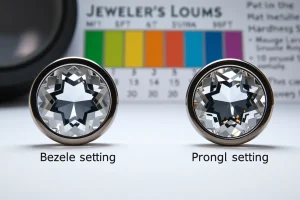
- Prioritize the Bezel Setting: A full bezel surrounds the entire perimeter of the stone with a metal rim. This is the gold standard for mid-hardness stones because it absorbs the shock of accidental bumps and prevents the edges from chipping.
- Opt for Heavy-Duty Prongs: If a bezel is aesthetically undesirable, use a prong setting with at least four to six thick prongs. Ensure the prongs wrap slightly over the crown of the stone to prevent it from shifting.
- Implement a Gallery Rail: For prong settings, a gallery rail (a thin metal wire connecting the prongs) provides structural integrity and prevents prongs from bending outward, which would otherwise leave the stone vulnerable.
- Avoid Tension Settings: Never use tension settings for stones in this range. The constant pressure required to hold the stone in place can exceed the stone’s structural limits, leading to catastrophic cleavage failure.
Expert Tip: When setting stones like Moonstone or Peridot, always check for internal inclusions. Stones with visible fractures should exclusively be set in bezels to avoid the risk of the stone splitting under the pressure of a prong.
Exceptions
While the above rules generally apply, certain exceptions exist based on the specific mineral species:
- High-Quality Cabochons: Stones cut as cabochons (smooth, rounded tops) are naturally more resistant to chipping than faceted stones. These may be safely set in semi-bezels or secure prongs.
- Pendants and Brooches: Because these items do not strike hard surfaces as often as rings, you may opt for more decorative, open settings without significantly increasing the risk of damage.
- Harder Variants: Always verify the specific hardness of the individual specimen, as some mineral varieties within a group can fluctuate by 0.5 points.
When to Ask a Professional
Consult a certified gemologist or a master jeweler in the following scenarios:
- Resizing Existing Jewelry: If you are resizing a ring containing a 6-6.5 hardness stone, a professional must ensure the stone is not under undue stress during the heating and soldering process.
- Stone Replacement: If a stone has chipped, a professional can determine if the chip was caused by a faulty setting or a natural flaw in the gemstone.
- Custom Design: When creating a bespoke piece, a jeweler can calculate the exact metal thickness needed to protect the stone without obscuring its brilliance.
FAQ
Can I wear a 6.5 hardness stone in an engagement ring?
Yes, but only if it is in a very secure setting like a full bezel. Prongs are risky for daily wear on the dominant hand.
Why is a bezel better than prongs for mid-hardness stones?
A bezel protects the entire circumference of the stone, whereas prongs leave the edges exposed to impact and scratches.
Will a harder metal setting protect a softer stone?
The metal's hardness doesn't protect the stone from impact, but the *amount* of metal covering the stone (the setting style) does.
Leave a Reply