
Short Answer
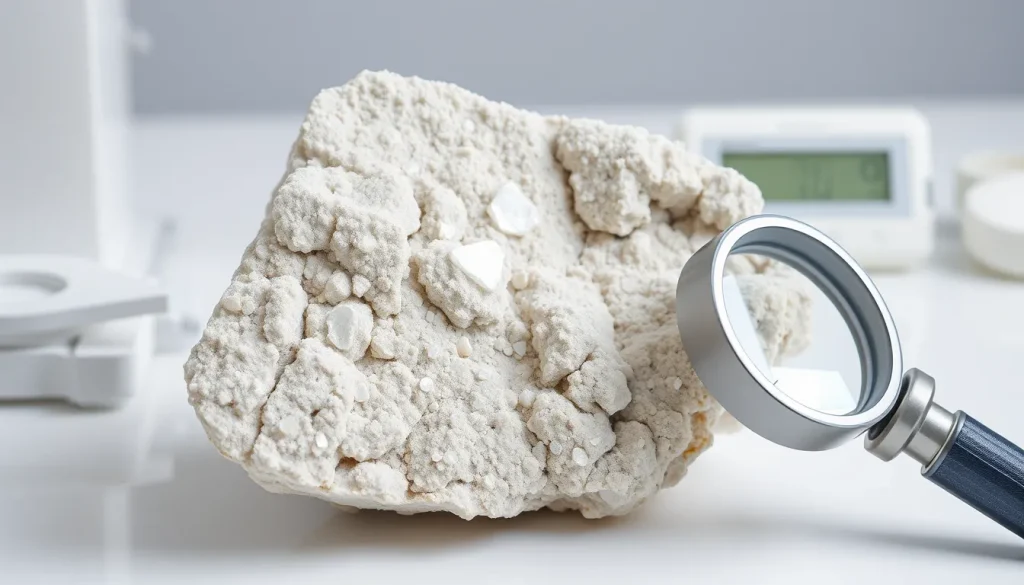
Clinoptilolite is a naturally occurring zeolite mineral that stands out in the geological world not for its brilliance or hardness, but for its extraordinary internal architecture. As a member of the heulandite group, it is prized more for its chemical utility and absorbent properties than for its use in fine jewelry, though it remains a subject of fascination for mineral collectors and industrial chemists alike.
What Is Clinoptilolite?
Clinoptilolite is a complex aluminosilicate mineral with a framework structure consisting of interconnected tetrahedra of silica and alumina. This structure creates a series of channels and cavities, effectively making the mineral a “molecular sieve.” These pores allow the mineral to selectively trap ions and molecules from its environment, a process known as ion exchange.
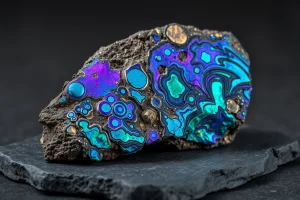
Typically forming in the cavities of volcanic rocks or as a result of the alteration of volcanic ash in alkaline environments, Clinoptilolite usually appears in massive, earthy, or crystalline forms. Its color ranges from white and grey to pale yellow or green, depending on the trace elements present during its formation.
Practical Uses and Limitations
Due to its unique porous structure, Clinoptilolite is rarely used as a gemstone but is indispensable in several professional fields:
- Environmental Remediation: It is used to remove heavy metals and radioactive isotopes (such as Cesium and Strontium) from wastewater.
- Agriculture: It serves as a soil conditioner, helping to retain nutrients and water while reducing ammonia emissions.
- Medicine and Wellness: In purified forms, it is used in detoxifying supplements and topical poultices to draw out toxins.
- Industrial Filtration: Its ability to act as a catalyst and filter makes it valuable in the petrochemical industry.
Gemologist’s Note: While Clinoptilolite may appear attractive in raw form, its low Mohs hardness and tendency to crumble make it unsuitable for traditional jewelry settings or polishing.
Identification and Look-Alikes
Identifying Clinoptilolite requires a combination of physical observation and chemical testing, as it often resembles other zeolites or common clays.
Physical Characteristics
| Property | Description |
|---|---|
| Color | White, grey, cream, occasionally pale green. |
| Luster | Dull, earthy, to pearly on cleavage faces. |
| Hardness | Approximately 3.5 to 4.5 on the Mohs scale. |
| Transparency | Opaque to translucent. |
Common Look-Alikes
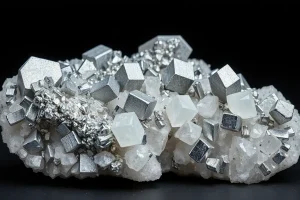
Clinoptilolite is frequently confused with other minerals in the zeolite family, such as Heulandite or Stilbite. However, Clinoptilolite typically lacks the distinct tabular or bow-tie crystal habits of its cousins, appearing more massive or microcrystalline. It can also be mistaken for Kaolinite (clay), but its higher density and specific reaction to acid tests help distinguish it.
Symbolism and Modern Beliefs
In the realm of metaphysical beliefs, Clinoptilolite is viewed as a stone of “cleansing” and “purification.” This is a direct symbolic extension of its physical ability to absorb toxins. Practitioners believe that the stone helps in:
- Emotional Detoxification: Clearing away negative energy or emotional baggage.
- Physical Balance: Harmonizing the body’s internal systems.
- Mental Clarity: Removing “mental clutter” to allow for better focus and intuition.
Unlike diamonds or rubies, which symbolize power or passion, Clinoptilolite is associated with the quiet, steady process of renewal and restoration.
FAQ
Can Clinoptilolite be used in jewelry?
Generally, no. Its low hardness and fragile structure make it prone to scratching and crumbling, which is unsuitable for wearable jewelry.
What makes Clinoptilolite different from other zeolites?
Clinoptilolite is specifically prized for its high selectivity for ammonium and certain heavy metal ions compared to other zeolites like Chabazite.
Is Clinoptilolite safe for skin contact?
In its pure mineral form, it is generally safe, but industrial-grade versions may contain impurities. Always use pharmaceutical-grade zeolite for wellness applications.
Leave a Reply