
Short Answer
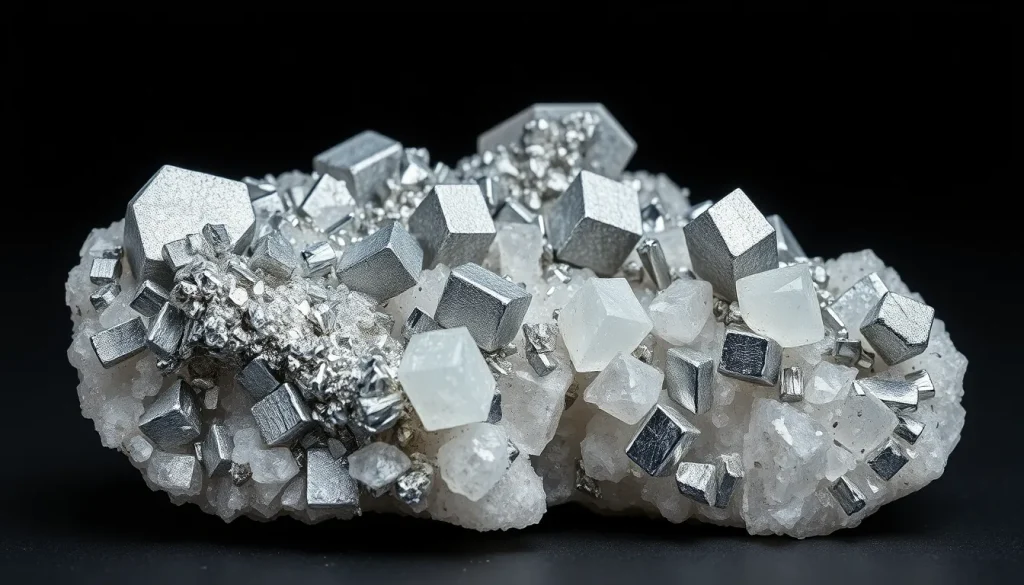
Galena is perhaps the most recognizable of the sulfide minerals, prized by collectors for its striking metallic luster and perfect cubic cleavage. While primarily known as the world’s leading ore of lead, Galena is often sought after in the gemstone and mineral trade for its architectural beauty and perceived grounding energies.
What Is Galena?
Galena is a lead sulfide mineral (PbS) that crystallizes in the cubic system. It is characterized by its heavy weight—a result of its high lead content—and its brilliant, silver-grey metallic sheen. In nature, it typically occurs in hydrothermal veins and sedimentary deposits.
From a gemological perspective, Galena is not a “gemstone” in the traditional sense of being used in faceted jewelry due to its extreme softness and fragility. However, it is highly valued as a collector’s specimen. Its most defining characteristic is its perfect cubic cleavage, meaning that when it breaks, it consistently forms smaller, perfect cubes.
Practical Uses and Limitations
Due to its physical properties, Galena has very specific applications and significant limitations:
- Industrial Use: Its primary use remains the extraction of lead for batteries, radiation shielding, and alloys.
- Collector Use: It is used in mineral displays and as a study piece for crystallography.
- Limitations: Galena is too soft (Mohs 2.5) for jewelry. It is also prone to scratching and can be brittle.
Safety Note: Because Galena contains lead, it should be handled with care. It is recommended to wash hands after handling raw specimens and to avoid inhaling any dust produced by the mineral.
Varieties and Related Materials
While Galena is relatively uniform in appearance, it is often found associated with other minerals such as sphalerite, pyrite, and quartz. The most significant related material, however, is Anglesite.
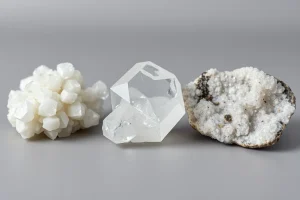
Anglesite (PbSO4) is a secondary mineral that forms through the oxidation of Galena. When Galena is exposed to oxygen and water over geological time, the sulfide is replaced by sulfate. This transformation often results in beautiful, translucent to colorless crystals that maintain the original cubic shape of the Galena “parent” crystal, a phenomenon known as a pseudomorph.
Identification and Look-Alikes
Galena can be identified by several key markers:
| Feature | Galena Characteristic |
|---|---|
| Luster | Bright Metallic |
| Color | Lead-Grey to Silver |
| Hardness | 2.5 (Very Soft) |
| Density | Extremely High (Heavy) |
Common look-alikes include Pyrite (which is harder and brassy-yellow) and Hematite (which lacks the perfect cubic cleavage and is typically darker/redder when powdered).
Symbolism and Modern Beliefs
In the realm of metaphysical healing, Galena is regarded as a stone of stability and grounding. Because of its heavy physical weight, practitioners believe it helps “anchor” the user to the earth, providing a sense of security and focus during times of chaos.
It is often associated with the Root Chakra, believed to assist in clearing mental clutter and promoting a structured approach to problem-solving. Many collectors use it as a tool for meditation to foster a sense of inner strength and resilience.
FAQ
Can Galena be used in jewelry?
No, Galena is too soft and brittle for jewelry. It scratches easily and contains lead, making it unsuitable for prolonged skin contact.
How is Anglesite different from Galena?
Galena is a sulfide (PbS) with a metallic luster, while Anglesite is a sulfate (PbSO4) that is usually translucent to transparent and forms via the oxidation of Galena.
Is Galena toxic to touch?
While touching a specimen is generally safe, you should avoid licking it, inhaling its dust, or handling it for long periods without washing your hands afterward due to the lead content.
Leave a Reply