
Short Answer
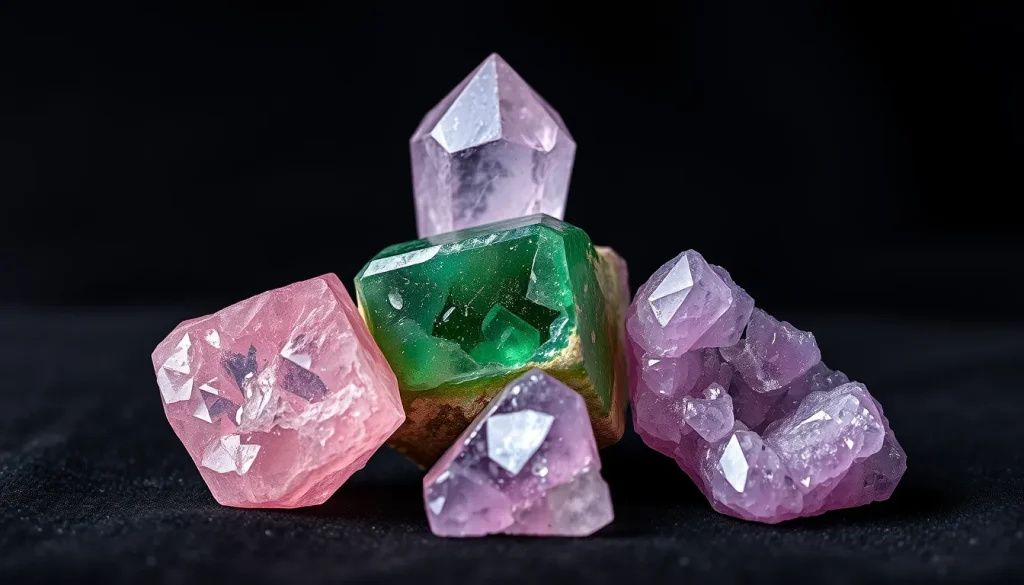
Lithium, a light alkali metal, is rarely found in its pure form in nature, but it combines with other elements to create some of the most visually striking and chemically interesting minerals in the gemological world. These lithium-bearing minerals are typically associated with granitic pegmatites, where slow cooling allows for the growth of large, high-quality crystals.
What Is a Lithium-Bearing Mineral?
Lithium-bearing minerals are a group of chemical compounds where lithium (Li) is a primary constituent of the crystal lattice. In gemology, these are most commonly found within the silicate family. Because lithium is a relatively rare element in the Earth’s crust, the gemstones derived from these minerals are often prized for their rarity and specific color palettes.
The most prominent examples include Spodumene (which encompasses Kunzite and Hiddenite), Lepidolite, and Petalite. These minerals are characterized by their specific refractive indices and, in the case of Spodumene, a distinct monoclinic crystal system that can produce exceptional brilliance when faceted correctly.
Varieties and Related Materials
The diversity of lithium minerals is best observed through the different species and their color varieties:
- Spodumene: The most commercially significant lithium gemstone. Its pink-to-violet variety is known as Kunzite, while the green variety is known as Hiddenite.
- Lepidolite: A lithium-rich mica. While usually too soft for faceted jewelry, it is highly valued as a collector’s mineral and for cabochons, appearing in shades of lilac and lavender.
- Petalite: A rare lithium aluminum silicate. It is often colorless or pale pink and is known for its unique crystal habit and historical significance in early lithium research.
- Amblygonite: A related phosphate mineral that occasionally contains lithium, often appearing in yellow or colorless crystals.
Identification and Look-Alikes
Distinguishing lithium minerals from other gemstones requires a combination of visual inspection and laboratory testing. For instance, Kunzite is often mistaken for Rose Quartz or Morganite due to its pink hue.
| Mineral | Key Identifier | Common Look-Alike |
|---|---|---|
| Kunzite | Strong pleochroism (pink to colorless) | Morganite / Rose Quartz |
| Hiddenite | Emerald-green color, monoclinic crystals | Peridot / Tsavorite |
| Lepidolite | Micaceous cleavage (peels in sheets) | Amethyst (low grade) |
Jewelry Suitability and Care
The suitability of lithium minerals for jewelry varies significantly by species. Spodumene (Kunzite/Hiddenite) is hard enough for rings and necklaces (Mohs 6.5–7), but it possesses a critical vulnerability: thermal sensitivity.
Gemologist Tip: Kunzite is known to fade in sunlight over time. This process, called photochromism, can turn a deep pink stone nearly colorless. Always store Kunzite in the dark and avoid prolonged exposure to direct UV rays.
Lepidolite, with a Mohs hardness of only 2.5–3, is unsuitable for most jewelry settings and is best kept as a specimen or used in protective settings for pendants.
Quality and Value Factors
When evaluating lithium-bearing gemstones, the following factors determine market value:
- Color Saturation: For Kunzite, a deep, saturated pink-violet is most prized. For Hiddenite, a vivid, deep green is the gold standard.
- Clarity: High-quality Spodumene should be eye-clean. Internal fractures (feathers) are common and can significantly reduce value.
- Crystal Size: Due to their growth in pegmatites, large, flawless crystals are rare and command a premium among collectors.
- Pleochroism: The ability of the stone to show different colors from different angles is a hallmark of quality in lithium silicates.
FAQ
Why does my Kunzite gemstone fade in the sun?
Kunzite is photochromic, meaning its color centers are unstable when exposed to ultraviolet (UV) light, causing the pink pigment to break down over time.
Can Lepidolite be used in a ring?
No, Lepidolite is too soft (Mohs 2.5-3) and would scratch or crumble quickly under daily wear. It is better suited for collectibles or protected pendants.
What is the difference between Kunzite and Morganite?
While both are pink, Kunzite is a lithium-bearing Spodumene, whereas Morganite is a beryllium-bearing Beryl. They have different chemical compositions and refractive indices.
Leave a Reply