
Short Answer
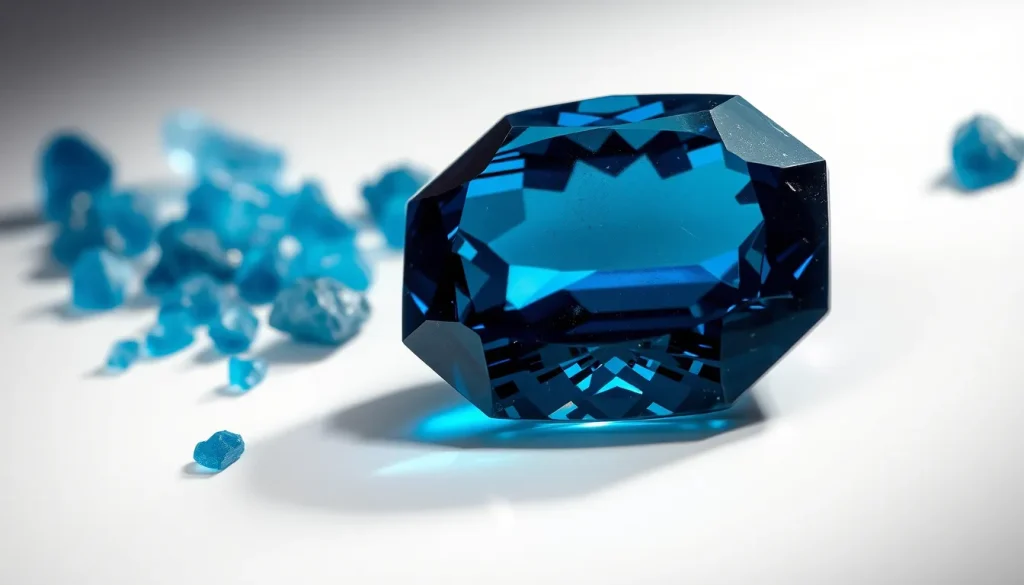
Among the vast spectrum of colors exhibited by the tourmaline group, few are as coveted or as elusive as the deep, saturated blue of Indicolite. While tourmaline is famous for its polychromatic nature, true blue crystals are geographically limited and chemically specific, making them a centerpiece for high-end collectors and connoisseurs of rare minerals.
What Is Indicolite?
Indicolite is the trade name for the blue variety of tourmaline. Chemically, it is a complex boron silicate mineral. While most blue tourmalines are actually a shade of blue-green (often termed “cyan” or “teal”), true Indicolite possesses a distinct blue hue that ranges from a pale sky blue to a deep, midnight indigo.
The coloration is primarily attributed to the presence of iron (Fe2+) within the crystal lattice. Because the conditions required to produce a pure blue crystal without significant green or yellow interference are rare in nature, Indicolite is significantly less common than its pink (rubellite) or green (verdelite) counterparts.
Names and Trade Terminology
In the gemstone trade, terminology can often be fluid, but specific terms are used to categorize this material:

- Indicolite: Specifically refers to the blue variety. The name is derived from the Latin indicum, meaning indigo.
- Paraiba Tourmaline: While often blue, these are chemically distinct (containing copper) and are a separate, even rarer category of neon-blue tourmaline.
- Blue-Green Tourmaline: Often confused with Indicolite, these stones have a stronger green component and are generally more abundant.
Identification and Look-Alikes
To the untrained eye, Indicolite can be mistaken for several other blue gemstones. Professional gemologists rely on specific diagnostic tools to differentiate them:
| Feature | Indicolite | Blue Sapphire | Aquamarine |
|---|---|---|---|
| Hardness (Mohs) | 7.0 – 7.5 | 9.0 | 7.5 – 8.0 |
| Crystal System | Trigonal | Trigonal | Hexagonal |
| Pleochroism | Strong | Moderate | Weak to Moderate |
A key identifier for Indicolite is its strong pleochroism, meaning the stone displays different colors (e.g., blue and greenish-blue) when viewed from different angles.
Quality and Value Factors
The value of Indicolite is driven by several critical factors:
Color Saturation and Hue
The most valuable stones are those with a pure, vivid blue hue. Stones that lean too heavily toward green or grey are less desirable. The “electric” blue tones are the most prized.
Clarity
While some inclusions are common in tourmaline, eye-clean Indicolite commands a premium. Fluid inclusions or “veils” can detract from the stone’s brilliance.
Carat Weight
Due to the rarity of large, high-quality blue crystals, the price per carat increases exponentially as the size of the gemstone increases.
Expert Tip: When purchasing Indicolite, always check the stone under natural daylight. Artificial lighting can often mask a greenish tint that is apparent in sunlight.
Jewelry Suitability and Care
Indicolite is suitable for most types of jewelry, including rings, pendants, and earrings. However, due to its hardness of 7-7.5, it is softer than sapphires or diamonds.
- Setting: Protective settings (like bezel or partial bezel) are recommended for rings to prevent chipping.
- Cleaning: Use lukewarm soapy water and a soft brush. Avoid ultrasonic cleaners if the stone has visible fractures.
- Chemicals: Avoid exposure to harsh chemicals or acids, which can damage the surface polish.
FAQ
Is Indicolite the same as Paraiba Tourmaline?
No. Indicolite is colored by iron and typically has a deeper blue hue, whereas Paraiba is colored by copper and exhibits a neon, electric blue-green glow.
How can I tell Indicolite from a Blue Sapphire?
While both are blue, sapphires are significantly harder (9 on Mohs scale) and do not show the same level of strong pleochroism as Indicolite.
Are Indicolite gemstones heat-treated?
Most Indicolite is sold untreated. While some tourmalines are heated to change color, true blue Indicolite is usually valued for its natural state.
Leave a Reply