
Short Answer
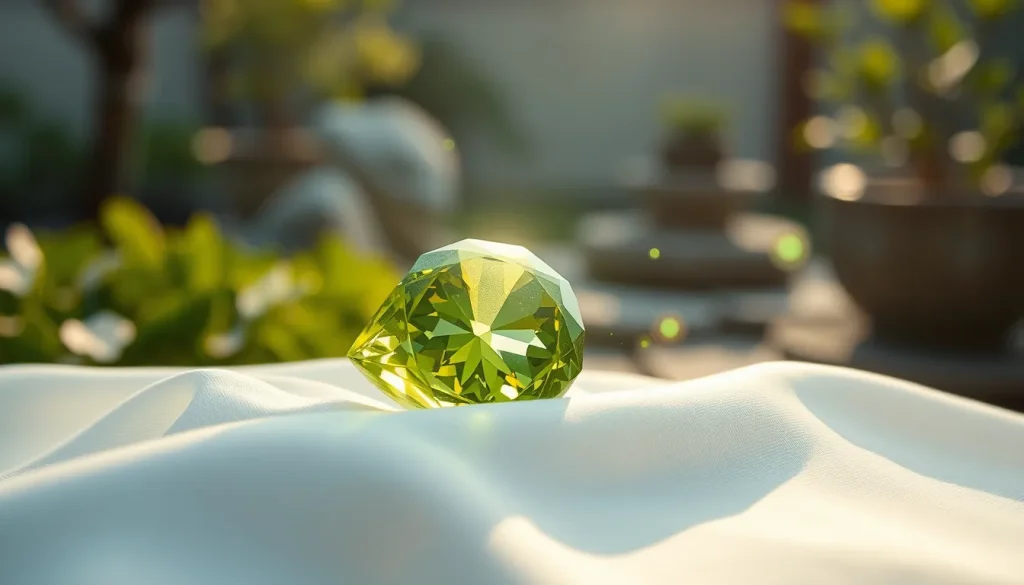
Peridot, the vibrant lime-green gemstone of the olivine group, has been prized since antiquity not only for its unique color but for its purported ability to soothe the spirit. In the realm of holistic healing, green stones are intrinsically linked to the heart, serving as conduits for love, compassion, and emotional release.
What Is Peridot?
From a scientific perspective, Peridot is the gem-quality variety of the mineral olivine, specifically the magnesium-iron silicate (Mg, Fe)2SiO4. Unlike many other gemstones that form in the Earth’s crust, peridot originates in the upper mantle and is brought to the surface via volcanic activity, often found in basaltic rocks.
Its distinctive yellowish-green hue is caused by the presence of iron. Because it is an allochromatic stone, its color is consistent across most specimens, ranging from a pale chartreuse to a deep olive green. On the Mohs scale of mineral hardness, peridot ranks between 6.5 and 7, making it durable enough for jewelry but susceptible to scratching if not handled with care.
Symbolism and Modern Beliefs
In metaphysical practices, peridot is closely aligned with the Heart Chakra (Anahata). The heart chakra is believed to be the center of love, empathy, and emotional equilibrium. Green is the corresponding color for this energy center, and peridot is often cited as one of the most effective stones for opening this portal.

Modern practitioners believe that peridot assists in the following emotional processes:
- Emotional Detoxification: Helping the wearer release old grudges, jealousy, and resentment.
- Confidence Building: Encouraging a sense of self-worth and the courage to express one’s true emotions.
- Stress Reduction: Promoting a feeling of peace and tranquility during periods of high anxiety.
History and Cultural Significance
The use of peridot for healing and protection dates back thousands of years. The Ancient Egyptians referred to it as the “Gem of the Sun,” believing it could protect the wearer from “terrors of the night.” In medieval Europe, it was often used in religious jewelry to symbolize purity and spiritual renewal.
“The vivid green of the peridot has long been seen as a symbol of nature’s rebirth, mirroring the cyclical healing of the human heart after emotional trauma.”
Jewelry Suitability and Care
To maintain the energetic and physical integrity of peridot, proper care is essential. Because it is a relatively soft gemstone compared to sapphires or diamonds, it requires specific maintenance:
| Care Aspect | Recommendation | Reason |
|---|---|---|
| Cleaning | Warm soapy water and soft brush | Avoids harsh chemicals that may damage the surface. |
| Storage | Separate soft pouch | Prevents harder gemstones from scratching the surface. |
| Exposure | Avoid prolonged direct sunlight | Prevents potential fading in low-quality specimens. |
Quality and Value Factors
When selecting peridot for emotional healing or jewelry, consider the following gemological factors:
- Color: The most valued stones are those with a strong, saturated green without too much yellow or brown tint.
- Clarity: While many peridots are eye-clean, some contain small inclusions (crystals) that are characteristic of the mineral.
- Cut: A well-cut stone maximizes the internal brilliance and “glow” of the gemstone, which is often associated with its “light-bearing” metaphysical properties.
FAQ
Can peridot be worn daily for healing?
Yes, but due to its hardness of 6.5-7, it is best worn in protected settings (like bezels) to avoid scratches during daily activities.
How does peridot differ from emerald in terms of the Heart Chakra?
While both are green, emerald is often associated with deep, unconditional love and abundance, whereas peridot is more focused on emotional cleansing and the release of negativity.
Is synthetic peridot as effective for emotional healing?
In gemology, synthetics have the same chemical properties. However, in metaphysical beliefs, natural stones are generally preferred for their 'earth energy' and unique inclusions.
Leave a Reply