
Short Answer
The pursuit of rare collector gemstones transcends traditional jewelry interests, venturing into the realm of mineralogy and geological curiosity. Unlike commercial gemstones, which are valued primarily for their suitability in jewelry, collector minerals are prized for their rarity, crystal habit, and scientific significance. This guide provides a systematic approach to identifying and valuing these elusive treasures.
Direct Answer
Identifying and valuing rare collector gemstones requires a synthesis of physical property analysis, chemical verification, and market scarcity assessment. Identification is achieved by testing constants such as refractive index, specific gravity, and hardness, while valuation is determined by the intersection of rarity, specimen quality, and provenance. For the collector, a ‘perfect’ specimen is often one that preserves its natural crystal form rather than one that has been faceted into a gemstone.
Relevant Conditions
The process of identification and valuation is most critical under the following conditions:
- Acquisition of Unidentified Specimens: When purchasing from estate sales, mineral shows, or private collectors where documentation is lacking.
- Verification of Rare Species: When a specimen is claimed to be a rare mineral (e.g., Painite, Musgravite, or Grandidierite) that has common look-alikes.
- Investment Transitions: When moving a collection from a hobbyist level to a professional investment portfolio requiring certified appraisals.
- Scientific Documentation: When the goal is to catalog a specimen’s specific locality, which significantly impacts its value.
Recommended Steps
To accurately identify and value a rare mineral, follow this professional sequence:

Step 1: Preliminary Physical Observation
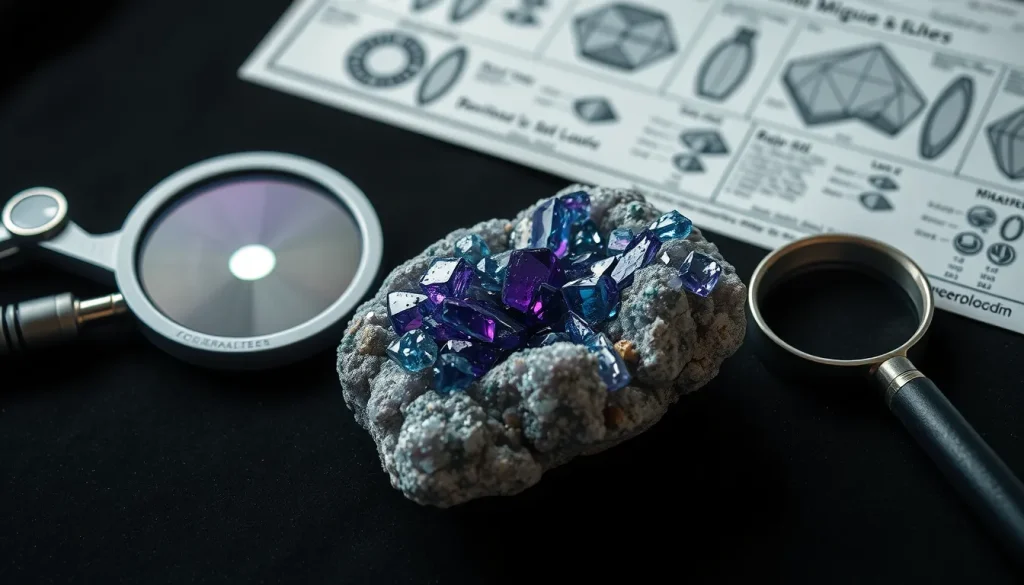
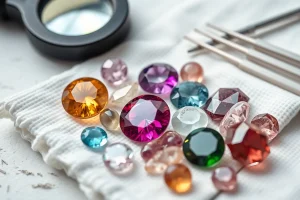
Begin with a non-destructive visual analysis. Note the crystal habit (the characteristic shape of the crystal), the luster (how light reflects off the surface), and the color zoning. Use a 10x jeweler’s loupe to inspect for internal inclusions which can act as ‘fingerprints’ for specific localities.
Step 2: Basic Physical Testing
Apply standard gemological tests to narrow down the mineral family:
- Hardness Test: Use the Mohs scale to determine the mineral’s resistance to scratching.
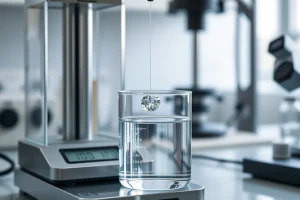
- Specific Gravity: Use a hydrostatic balance to determine the density of the specimen.
- Streak Test: Rub the mineral across an unglazed porcelain plate to observe the color of its powder.
Step 3: Advanced Instrumental Analysis
For rare minerals, visual and basic tests are often insufficient. Professional identification requires:
- Refractometry: Measuring the Refractive Index (RI) to determine how light bends through the stone.
- Spectroscopy: Using FTIR or Raman spectroscopy to identify the chemical bonds and molecular structure.
- XRD (X-Ray Diffraction): The gold standard for determining the exact crystal structure of a mineral.
Step 4: Valuation Assessment
Once identified, value is calculated based on a weighted matrix of the following factors:
| Factor | High Value Indicators | Low Value Indicators |
|---|---|---|
| Rarity | Single-locality species; extremely low occurrence. | Common minerals with rare colors. |
| Crystal Form | Euhedral (well-formed) crystals; terminated points. | Massive or fragmented forms. |
| Clarity | Gem-grade transparency; absence of fractures. | Opaque or heavily included. |
| Provenance | Documented history from a famous mine. | Unknown or generic origin. |
Expert Tip: In the collector market, a specimen with a known, prestigious locality (e.g., Mogok, Myanmar) can be worth ten times more than an identical specimen of unknown origin.
Exceptions
Certain minerals defy standard identification protocols:
- Polymorphs: Minerals with the same chemical composition but different crystal structures (e.g., Diamond and Graphite) require XRD for definitive distinction.
- Pseudomorphs: When one mineral replaces another while retaining the original’s shape. This can mislead a collector relying solely on crystal habit.
- Synthetic Mimics: High-quality lab-grown minerals can mimic rare species perfectly in RI and hardness, requiring advanced trace-element analysis to detect.
When to Ask a Professional
While basic tools are helpful, a certified gemologist or mineralogist is essential when:
- High Monetary Stakes: The estimated value exceeds the cost of a professional laboratory report (e.g., GIA or SSEF).
- Legal Requirements: The specimen is being transported across international borders and requires a CITES permit or customs valuation.
- Ambiguous Results: When the RI or specific gravity falls within the overlap range of two different mineral species.
- Investment Certification: When a formal appraisal is needed for insurance purposes.
FAQ
Does a faceted rare stone have more value than a raw crystal?
Not necessarily. For jewelry buyers, faceted is better. For serious mineral collectors, a raw, well-terminated crystal is often significantly more valuable.
Can I identify rare minerals using only a loupe?
A loupe helps identify inclusions and habit, but it cannot provide a definitive identification. Instrumental testing (RI, SG) is required for confirmation.
What is the most important factor in mineral provenance?
The specific mine or locality. A specimen from a closed or legendary mine often commands a premium regardless of its size.
Leave a Reply