
Short Answer
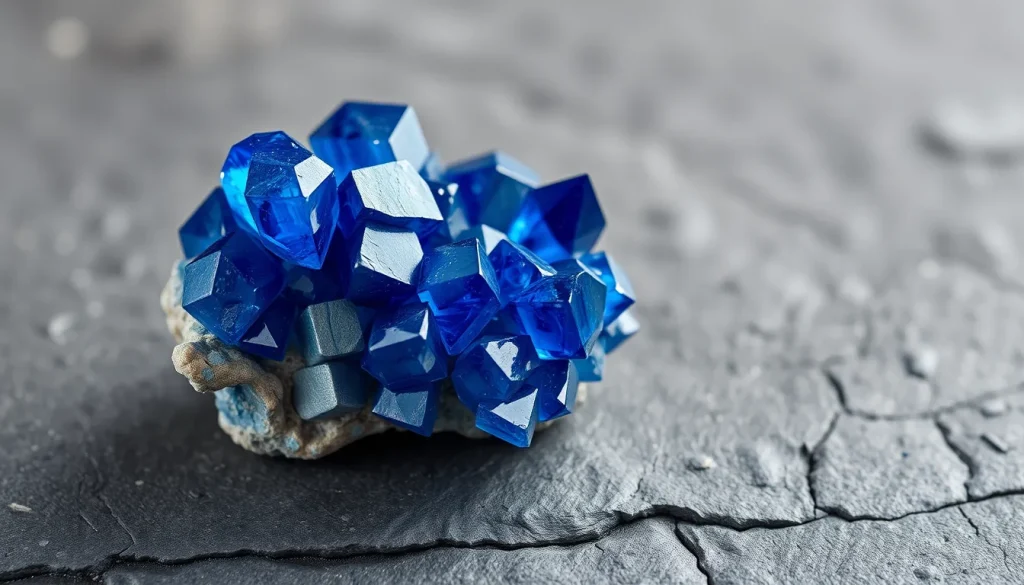
Azurite is a striking copper carbonate mineral prized for its intense, deep blue hue. While more commonly recognized as a mineral specimen for collectors than a faceted gemstone, its vivid color and crystalline structures make it a sought-after material for cabochons and statement jewelry. Due to its chemical composition and relative softness, Azurite requires specialized knowledge for both identification and maintenance.
What Is Azurite?
Azurite is a basic copper carbonate with the chemical formula Cu3(CO3)2(OH)2. It typically forms in the oxidized zones of copper ore deposits, often occurring alongside malachite. The deep blue color is a direct result of its copper content. In the world of mineralogy, Azurite is known for its monoclinic crystal system and its tendency to undergo a process called pseudomorphism, where it chemically alters into malachite while retaining the original azurite crystal shape.
Practical Uses and Limitations
Because of its physical properties, Azurite is primarily used in specific ways within the jewelry and arts industries:
- Collector Specimens: High-quality crystals are kept as investment pieces.
- Cabochons: It is most frequently cut into smooth, rounded cabochons to highlight its color and minimize the risk of chipping.
- Pigments: Historically, ground azurite was used as a blue pigment in tempera and watercolor paintings before the widespread use of synthetic ultramarine.
The primary limitation of Azurite is its low hardness. With a Mohs scale rating of 3.5 to 4, it is significantly softer than quartz or sapphire, making it prone to scratches and surface wear if used in rings or bracelets.

Identification and Look-Alikes
Distinguishing Azurite from other blue minerals is essential for the collector. The most common look-alikes include:
| Mineral | Key Difference from Azurite | Visual Clue |
|---|---|---|
| Malachite | Different chemistry (though related) | Green color with banding |
| Lapis Lazuli | Harder (5.5-6) and contains pyrite | Gold-colored metallic flecks |
| Blue Apatite | Different crystal structure | More transparent, lighter blue |
Jewelry Suitability and Care
Azurite is classified as a soft gemstone. To preserve its beauty, specific care protocols must be followed:
Expert Tip: Never use ultrasonic cleaners or steam cleaners on Azurite. The vibrations and heat can cause the stone to crack or lose its luster.
Cleaning Guidelines
- Use only a soft, dry microfiber cloth for dusting.
- If necessary, use a slightly damp cloth with distilled water; avoid soaps or chemical detergents.
- Dry the stone immediately to prevent moisture from seeping into micro-fractures.
Storage
Store Azurite separately from harder gemstones like diamonds or sapphires to prevent scratching. A lined jewelry box or individual soft pouches are recommended.
Quality and Value Factors
When evaluating Azurite, professionals look at the following criteria:
- Color Saturation: The most valuable pieces exhibit a deep, “electric” royal blue.
- Crystal Structure: Well-defined crystals are more valuable than massive, opaque chunks.
- Malachite Inclusion: While often found together (known as “Azurmalachite”), pure deep blue azurite is generally more prized for jewelry.
- Clarity and Luster: A vitreous to greasy luster is preferred over a dull or earthy appearance.
Symbolism and Modern Beliefs
In metaphysical circles, Azurite is often referred to as the “Stone of Heaven.” It is believed to facilitate the opening of the Third Eye chakra, enhancing intuition and mental clarity. Modern practitioners often use it during meditation to clear mental blocks and encourage a deeper understanding of spiritual concepts.
FAQ
Can Azurite be worn in a ring?
Yes, but it is not recommended for daily wear due to its low hardness (3.5-4). It is better suited for pendants or earrings where it is less likely to be bumped or scratched.
What is the difference between Azurite and Lapis Lazuli?
Azurite is a copper carbonate with a lower hardness, whereas Lapis Lazuli is a rock composed mainly of lazurite, calcite, and pyrite, and is significantly harder.
Why does my Azurite have green spots?
Those green spots are likely malachite. Azurite and malachite are chemically related and often occur together; over time, azurite can chemically transform into malachite.
Leave a Reply