
Short Answer
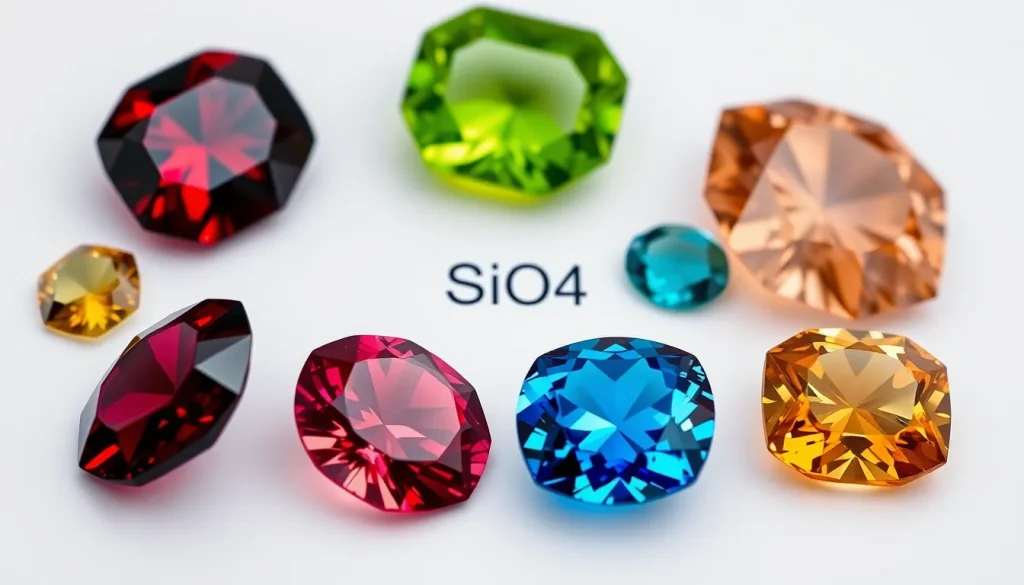
In the vast kingdom of mineralogy, silicates represent the most abundant group of minerals in the Earth’s crust. Among these, the nesosilicates (also known as orthosilicates) stand as the foundational structural unit. Unlike other silicates that form chains, sheets, or frameworks, nesosilicates are defined by their structural simplicity and chemical diversity, resulting in some of the most prized gemstones in the world.
What Is a Nesosilicate?
At a fundamental chemical level, a nesosilicate is a mineral where the basic building block—the silicon-oxygen tetrahedron (SiO4)4-—remains isolated. In these minerals, the tetrahedra do not share any oxygen atoms with one another. Instead, they are bonded together by intermediate metal cations, such as magnesium, iron, calcium, or aluminum.
This “isolated” structure typically leads to minerals with high density and relatively high hardness. Because the tetrahedra are not linked in long chains or sheets, the minerals often exhibit more equidimensional crystal habits and, in many cases, lack a distinct cleavage, which is a critical factor for lapidaries when cutting faceted gemstones.
Varieties and Related Materials
The nesosilicate group is incredibly diverse, encompassing several major gemstone families. The following are the most prominent:

- Garnet Group: Perhaps the most famous nesosilicates, garnets are a complex group of minerals including Almandine, Pyrope, Spessartine, Grossular, and Andradite. They are known for their high refractive index and wide range of colors.
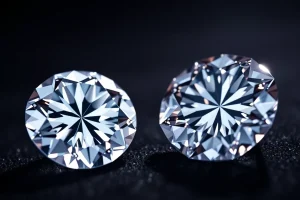
- Zircon: A zirconium silicate that is highly valued for its exceptional fire (dispersion), often rivaling that of diamonds.
- Olivine (Peridot): The gem-quality variety of olivine is known as Peridot. It is a magnesium-iron silicate typically found in volcanic rocks or mantle xenoliths.
- Topaz: An aluminum silicate containing fluorine and hydroxyl groups. Topaz is celebrated for its hardness and vivid colors.
- Staurolite: While less common as a faceted gem, it is a significant nesosilicate known for its characteristic “cross” twinning.
Identification and Look-Alikes
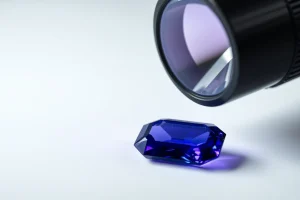
Identifying nesosilicates requires a combination of physical property analysis and optical testing. Because this group is so diverse, they can often be mistaken for one another or for other mineral groups.
| Gemstone | Key Identifier | Common Look-Alike |
|---|---|---|
| Peridot | Strong olive-green hue, double refraction | Tsavorite Garnet |
| Zircon | Extreme dispersion, high RI | Diamond / Cubic Zirconia |
| Garnet | Single refraction, high density | Almandine vs. Pyrope |
| Topaz | Perfect basal cleavage, high hardness | Citrine Quartz |
Jewelry Suitability and Care
Most nesosilicates are excellent for jewelry due to their inherent durability, though specific care varies by species.
Expert Tip: While Garnets and Zircons are generally stable, Topaz can be sensitive to thermal shock. Always avoid sudden temperature changes when cleaning Topaz jewelry to prevent fracturing along its basal cleavage plane.
- Hardness: Most fall between 6.5 and 8.5 on the Mohs scale, making them suitable for rings and pendants.
- Cleaning: Warm soapy water and a soft brush are recommended. Avoid ultrasonic cleaners for Zircon or treated Topaz.
- Stability: These minerals are generally chemically stable, though some Peridots may be sensitive to strong acids.
Quality and Value Factors
The value of nesosilicate gemstones is primarily driven by color saturation, clarity, and crystal size. For Garnets, the rarity of the species (e.g., Tsavorite vs. Almandine) heavily influences the price. For Zircon, the lack of internal fractures and the intensity of the blue or red hues are paramount. Peridot is valued for its “pure” green color without brown overtones.
FAQ
What makes a nesosilicate different from other silicates?
Unlike inosilicates (chains) or phyllosilicates (sheets), nesosilicates have isolated silica tetrahedra that do not share oxygen atoms with each other.
Are all garnets nesosilicates?
Yes, all minerals in the garnet group are classified as nesosilicates due to their isolated SiO4 structure.
Is Cubic Zirconia a nesosilicate?
No. Cubic Zirconia is a synthetic cubic oxide. Natural Zircon is a nesosilicate, but the synthetic version is a different chemical compound entirely.
Leave a Reply