
Short Answer
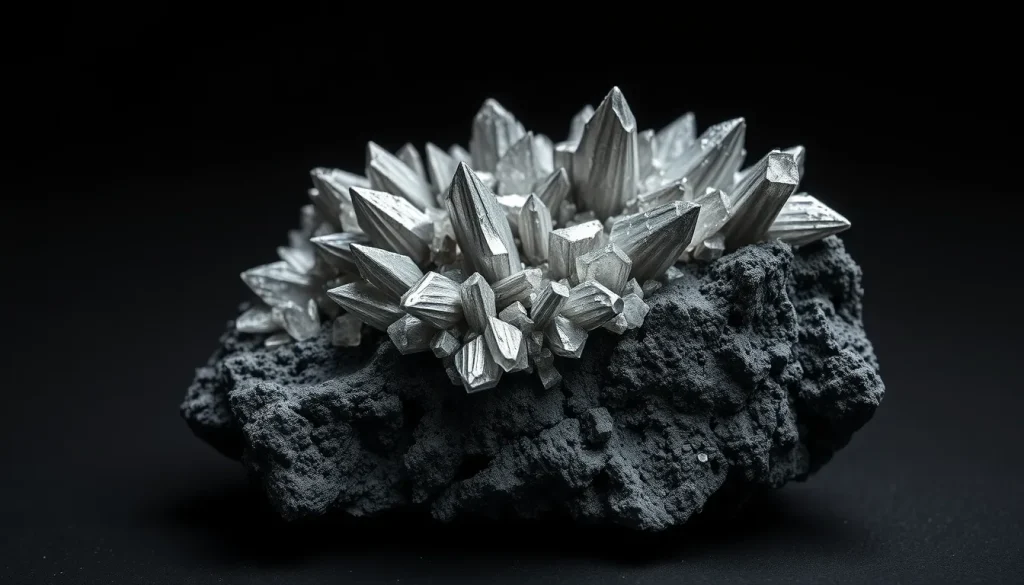
Antimonide minerals represent a distinct and relatively small group of mineral species characterized by the presence of antimony (Sb) acting as the primary anion. Unlike the more common antimony oxides or sulfides, antimonides are often found in highly reducing environments, making them rare and scientifically significant. For the gemologist, they are primarily of interest as rare collector’s specimens rather than traditional gemstones.
What Is an Antimonide Mineral?
Chemically, an antimonide is a compound consisting of antimony combined with another element, typically a metal. In the mineral kingdom, these are often classified as intermetallic compounds. The most prominent example is Stibnite (though technically a sulfide, it is the primary source of antimony) and more specific antimonides like Mimetite (an arsenate-antimonite) or rare native antimony alloys.
These minerals typically exhibit a metallic to sub-metallic luster and often appear in colors ranging from lead-grey to silver. Their crystal structures are frequently acicular (needle-like) or prismatic, which contributes to their striking visual appeal in raw mineral form.
Practical Uses and Limitations
Due to their specific chemical and physical properties, antimonide minerals are rarely used in commercial jewelry. Their primary value lies in mineralogical research and high-end specimen collecting.
Industrial and Scientific Use
- Semiconductors: Certain antimonide compounds are used in the production of infrared detectors and laser diodes.
- Metallurgy: Antimony is used as a hardening agent in alloys, particularly for lead in batteries.
Limitations in Gemology
Several factors prevent antimonides from becoming mainstream gemstones:
- Hardness: Most antimonides are quite soft (often below 3 on the Mohs scale), making them susceptible to scratches.
- Stability: Many are chemically unstable when exposed to air or moisture, leading to oxidation or degradation.
- Toxicity: Antimony is a toxic element; while stable in a mineral matrix, the handling of raw powders or processed antimonides requires caution.
Jewelry Suitability and Care
While not suitable for rings or bracelets that endure daily wear, antimonide minerals can be used in specialty jewelry, such as specimen pendants or encased miniatures.
Expert Tip: If incorporating an antimonide mineral into jewelry, always use a “sealed” setting, such as a glass dome or a high-quality resin encapsulation, to prevent atmospheric oxidation and protect the wearer from direct contact.
Care for these pieces should be minimal: avoid all chemical cleaners, ultrasonic cleaners, and steam. A soft, dry microfiber cloth is the only recommended tool for cleaning.
Identification and Look-Alikes
To the untrained eye, antimonide minerals can be easily confused with other metallic minerals. The following table outlines the key differences:
| Mineral | Luster | Key Identifier | Hardness |
|---|---|---|---|
| Antimonides | Metallic | Distinctive silver-grey; often acicular | Low (1.5 – 3) |
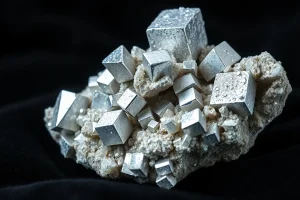
| Galena | Bright Metallic | Cubic cleavage; very heavy (high SG) | 2.5 – 2.75 |
| Pyrite | Brass-Yellow | Pale gold color; cubic crystals | 6 – 6.5 |
| Hematite | Metallic to Dull | Reddish-brown streak | 5.5 – 6.5 |
Quality and Value Factors
The value of antimonide minerals is determined by mineralogical perfection rather than the “four Cs” used for diamonds. Collectors look for:
- Crystal Integrity: Unbroken, well-defined crystal faces.
- Luster: A bright, untarnished metallic sheen.
- Rarity: Species that occur in only a few localities worldwide command the highest prices.
- Association: A specimen that occurs naturally with other rare minerals on a single matrix is significantly more valuable.
FAQ
Can antimonide minerals be worn as rings?
No, they are generally too soft and chemically unstable for daily wear. They are best suited for specimen pendants or museum displays.
Are all antimony minerals 'antimonides'?
No. Antimony can form oxides, sulfides (like stibnite), and halides. Only those where antimony acts as the anion are true antimonides.
Are antimonide minerals toxic?
Antimony is a toxic element. While safe to handle as solid minerals, one should avoid inhaling dust or ingesting fragments.
Leave a Reply