
Short Answer
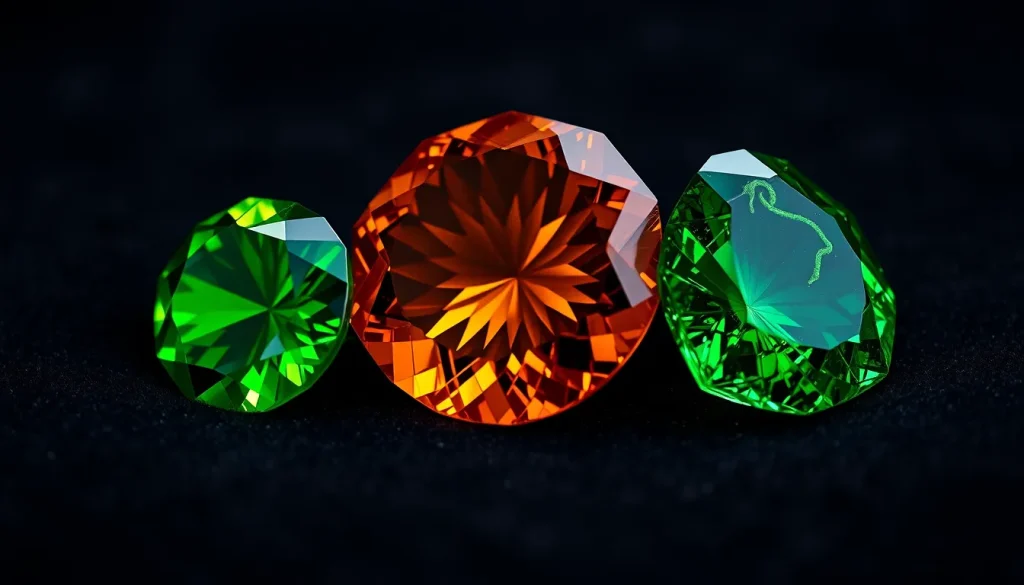
For the uninitiated, the word ‘garnet’ evokes images of dark, wine-red gemstones. However, to the gemologist and the serious collector, the garnet group is one of the most diverse and chemically complex families in the mineral kingdom. Spanning a vast array of colors—including vivid greens, brilliant oranges, and rare yellows—these stones are prized not only for their beauty but for their geological rarity and crystalline perfection.
What Is Garnet?
Garnets are a group of silicate minerals that share a common crystal structure but vary significantly in chemical composition. They are generally categorized into two primary series based on their chemistry: the Pyralspite group (containing aluminum) and the Ugrandite group (containing calcium). This chemical flexibility is precisely what allows garnets to manifest in such a wide spectrum of colors, ranging from the common Almandine to the exceedingly rare Demantoid.
Varieties and Related Materials
Collecting rare garnets requires an understanding of the specific species and the trace elements that give them their distinct colors. The following varieties are the primary targets for high-end collectors:
The Green Garnets
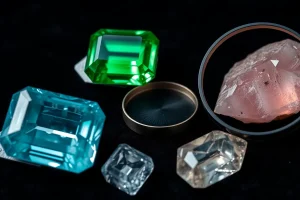
- Tsavorite: A vanadium-bearing grossular garnet from Kenya and Tanzania. It is prized for its intense, vivid green color and high brilliance, often rivaling emeralds but with greater durability.
- Demantoid: The rarest of the green garnets, characterized by an exceptional dispersion (fire) and the presence of “horsetail” inclusions—fine needles of rutile that are diagnostic of Russian origins.
The Orange and Yellow Garnets
- Spessartite: Known for its vibrant “mandarin” orange hue. The finest specimens are transparent and saturated, originating primarily from Namibia.
- Hessonite: A cinnamon-colored grossular garnet, often exhibiting a “honey-like” appearance. While more common, high-clarity, bright orange specimens are highly collectible.
The Rare Blue and Purple Garnets
While extremely rare, some varieties of Andradite or Grossular can exhibit blue or violet tones, often found in specific geological deposits in Africa or Asia. These are often considered “museum grade” stones due to their scarcity.

Identification and Look-Alikes
Because rare garnets often mimic other precious stones, professional identification is essential. Collectors should be aware of the following common look-alikes:
| Garnet Variety | Common Look-Alike | Key Distinguishing Feature |
|---|---|---|
| Tsavorite | Emerald | Tsavorite lacks the typical “jardin” inclusions of emerald and has higher brilliance. |
| Demantoid | Peridot | Demantoid has significantly higher dispersion (fire) and a higher refractive index. |
| Spessartite | Citrine/Carnelian | Spessartite possesses a much higher hardness (7.25-7.5) and superior luster. |
Quality and Value Factors
When evaluating a rare garnet for a collection, four primary factors dictate its market value:
- Color Saturation: For Tsavorite and Spessartite, the more vivid and “neon” the color, the higher the value.
- Clarity: While some inclusions are diagnostic (like the horsetail in Demantoid), overall eye-cleanliness is preferred for investment-grade stones.
- Dispersion: The ability of the stone to split light into spectral colors is a hallmark of high-quality Demantoids.
- Origin: Provenance is critical. Russian Demantoids or Namibian Spessartites typically command a premium over other sources.
Expert Tip: When purchasing rare green garnets, always request a laboratory report to confirm the stone is not a synthetic spinel or a treated glass imitation, as the value difference is astronomical.
Jewelry Suitability and Care
Garnets are excellent for jewelry due to their hardness (typically 6.5 to 7.5 on the Mohs scale). They are chemically stable and do not require the intense caution that emeralds or opals do. However, to maintain their luster, collectors should follow these guidelines:
- Cleaning: Use warm, soapy water and a soft brush. Avoid ultrasonic cleaners for stones with visible fractures.
- Storage: Store rare garnets separately from diamonds or sapphires to prevent surface scratches.
- Chemicals: Avoid exposure to harsh acids or bleach, which can damage the surface polish over time.
FAQ
Are rare garnets more expensive than red garnets?
Yes, varieties like Tsavorite and Demantoid are significantly more expensive than common Almandine or Pyrope garnets due to their rarity and high demand.
How can I tell a Tsavorite from an Emerald?
Tsavorite typically has higher brilliance and fewer inclusions than emeralds, and it lacks the characteristic 'oil' treatment common in emeralds.
Is it safe to wear rare garnets daily?
Yes, with a hardness of 7+ on the Mohs scale, most rare garnets are durable enough for rings and necklaces, provided they are kept away from very hard materials like diamonds.
Leave a Reply