
Short Answer
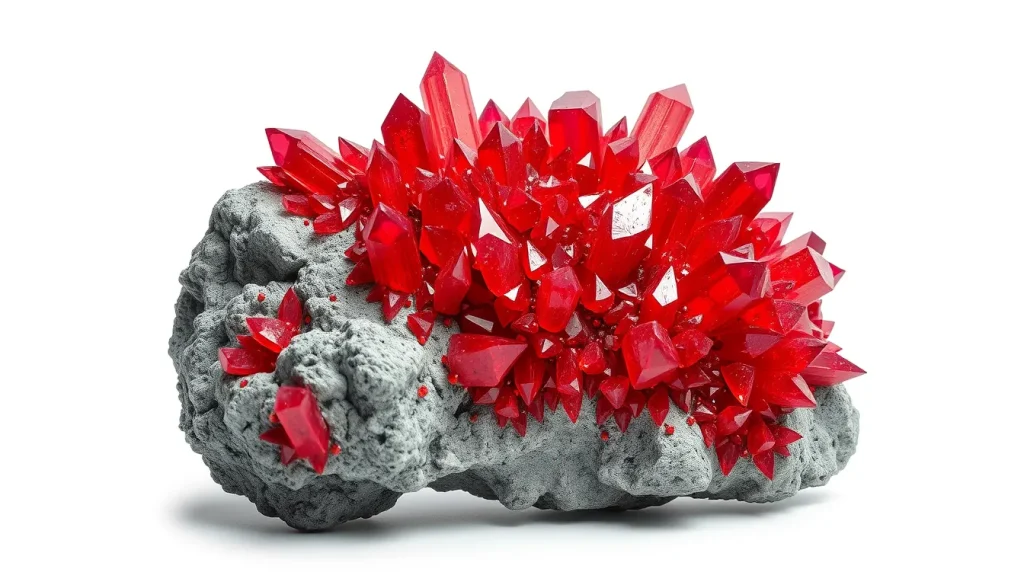
Among the most visually arresting minerals in the collector’s realm are the lead chromates. While not utilized in traditional jewelry due to their fragility and toxicity, these minerals are prized for their intense saturation and geometric precision. The most prominent member of this group, Crocoite, serves as a masterclass in the intersection of lead and chromium chemistry within the earth’s crust.
What Is Crocoite?
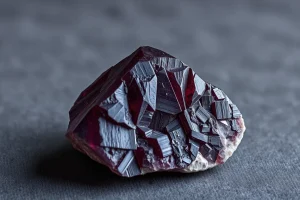
Crocoite is a rare lead chromate mineral with the chemical formula PbCrO4. It is most famous for its brilliant, saturated orange-red to scarlet color, which occurs due to the presence of the chromate ion (CrO42-). In nature, it typically forms as elongated, prismatic crystals that can reach impressive sizes, often appearing as needle-like clusters or radiating sprays.
From a chemical perspective, Crocoite is a secondary mineral. It forms in the oxidation zones of lead-bearing deposits where chromium is present in the groundwater or surrounding rock. This specific geochemical environment is rare, which contributes to the mineral’s high value among mineralogists.
Varieties and Related Materials
While Crocoite is the primary species of interest, it belongs to a broader family of chromates. These minerals often occur in association with other lead minerals like pyromorphite or cerussite.

- Crocoite: The pure lead chromate, characterized by its distinct red-orange hue and monoclinic crystal system.
- Other Lead Chromates: Various rare substitutions can occur, though pure Crocoite remains the gold standard for the species.
- Related Chromates: Other minerals like Wulfenite (a lead molybdate) often share similar aesthetic qualities and geological settings, though they differ chemically.
Identification and Look-Alikes
Identifying lead chromates requires a combination of visual inspection and physical testing. Because of its striking color, Crocoite is occasionally confused with other orange-red minerals.
| Property | Crocoite | Realgar | Wulfenite |
|---|---|---|---|
| Color | Bright Orange-Red | Ruby Red to Orange | Yellow to Orange |
| Hardness | 2.5 – 3 (Very Soft) | 1.5 – 2 (Very Soft) | 2.5 – 3 (Soft) |
| Luster | Adamantine to Resinous | Resinous | Adamantine |
| Crystal Habit | Prismatic/Needle-like | Massive/Prismatic | Tabular/Platy |
Expert Tip: Always handle Crocoite with extreme care. Its low Mohs hardness and brittle nature make it prone to snapping, and as a lead-bearing mineral, it should be handled with gloves and kept away from mouth or eye contact.
Practical Uses and Limitations
Due to its physical and chemical properties, Crocoite is strictly a collector’s mineral rather than a gemstone. Its limitations include:
- Hardness: With a Mohs hardness of approximately 2.5 to 3, it is far too soft for any form of wearable jewelry.
- Toxicity: As a lead chromate, it contains lead and hexavalent chromium, both of which are toxic. It is not suitable for applications where skin contact is prolonged or where dust can be inhaled.
- Stability: It can be sensitive to extreme temperature changes and strong acids.
Quality and Value Factors
For the mineral collector, the value of a lead chromate specimen is determined by several key factors:
- Crystal Integrity: Undamaged, sharp-terminated crystals are significantly more valuable than broken or etched specimens.
- Color Saturation: The deeper and more uniform the scarlet-red color, the higher the demand.
- Matrix Association: Specimens still attached to their original host rock (matrix) are generally more prized than loose crystals.
- Provenance: Specimens from the historic mines of Tasmania, Australia, are considered the world’s finest and command a premium price.
FAQ
Can Crocoite be used in jewelry?
No. It is too soft (Mohs 2.5-3) and contains toxic lead and chromium, making it unsuitable for jewelry.
Where is the best Crocoite found?
The finest specimens historically come from the Dundas area of Tasmania, Australia.
How should I clean a Crocoite specimen?
Avoid chemicals and water if possible. Use a soft brush or a gentle air blower to remove dust.
Leave a Reply