
Short Answer
Direct Answer
Safe handling of toxic gemstones involves a rigorous combination of containment, personal protective equipment (PPE), and strict hygiene protocols to prevent the ingestion, inhalation, or dermal absorption of hazardous elements. For minerals containing mercury (such as Cinnabar) or arsenic (such as Realgar and Orpiment), the core value of safe handling is the prevention of systemic toxicity through the elimination of dust and direct contact.
Relevant Conditions
Risk levels vary depending on the state of the mineral and the environment in which it is kept. The following conditions significantly increase the risk of toxicity:
- Mechanical Processing: Cutting, grinding, or polishing toxic minerals creates fine particulate dust that can be easily inhaled.
- Thermal Exposure: Heating certain arsenic and mercury minerals can release toxic vapors (e.g., mercury vapor) into the air.
- Chemical Reactions: Using strong acids or solvents for cleaning may trigger the release of hazardous gases.
- Physical Degradation: Some toxic minerals are friable or unstable, meaning they may crumble or powder over time, contaminating storage areas.
Recommended Steps
To ensure professional-grade safety when dealing with toxic specimens, follow these sequenced protocols:
1. Personal Protective Equipment (PPE)
Always employ a barrier between your skin and the specimen. Recommended gear includes:
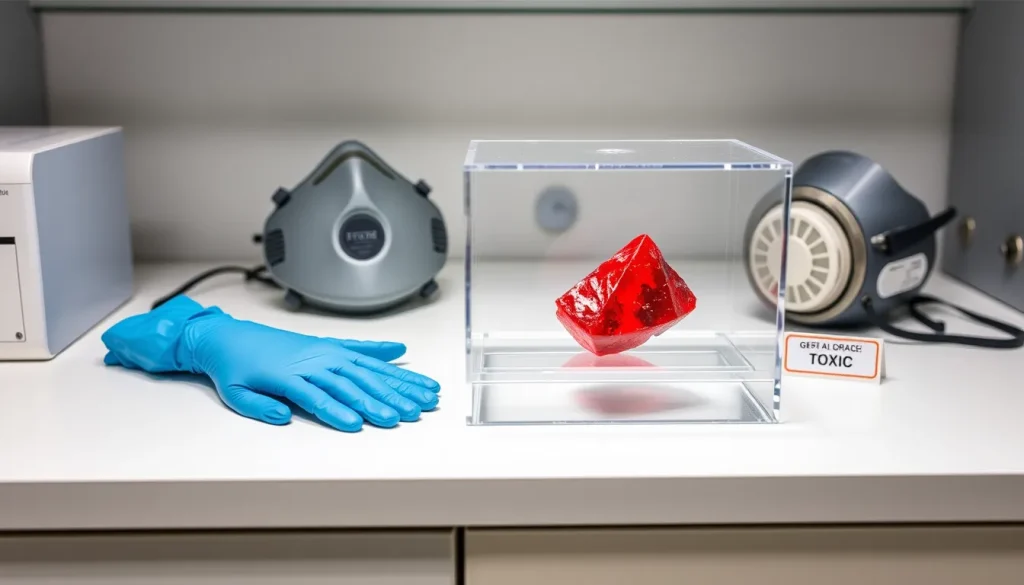
- Gloves: Nitrile or latex gloves should be worn during all handling sessions.
- Respiratory Protection: When cleaning or moving dusty specimens, use an N95 or P100 rated respirator.
- Eye Protection: Safety goggles prevent accidental splashes or dust from entering the ocular membranes.
2. Handling and Cleaning
Avoid dry cleaning methods. Use the following approach:
- Wet Cleaning: Use a damp cloth or soft brush with water to remove surface dust, preventing particles from becoming airborne.
- Dedicated Tools: Use separate tweezers and brushes for toxic minerals to avoid cross-contamination of other collections.
- Workstation Setup: Work in a well-ventilated area or under a fume hood if any chemical cleaning is required.
3. Storage and Labeling
Prevent accidental exposure to others through organized storage:
- Airtight Containers: Store toxic minerals in sealed, non-reactive plastic or glass containers.
- Clear Labeling: Every container must be clearly marked with a “TOXIC” or “POISON” warning label.
- Isolation: Keep toxic specimens in a separate cabinet or area away from food, drink, or high-traffic zones.
Expert Tip: Never store toxic minerals in the same drawer as organic materials or porous stones, as some volatile elements can migrate or contaminate surrounding specimens.
4. Decontamination
After handling, follow a strict hygiene routine:
- Wash hands and forearms thoroughly with soap and water immediately after removing gloves.
- Clean all work surfaces with a wet cloth and dispose of the cloth as hazardous waste if significant dust was present.
Exceptions
Not all toxic minerals are equally dangerous in their raw state. For example, stable, polished cabochons of toxic minerals are generally safe for brief handling, as the polishing process seals the surface and prevents dust creation. However, the risk remains high if the stone is chipped or cracked. Additionally, minerals that are chemically stable at room temperature and not prone to crumbling pose a lower immediate risk than those that are highly friable.
When to Ask a Professional
Certain scenarios require the intervention of a certified mineralogist or hazardous materials expert:
- Large-Scale Processing: If you intend to cut or facet a toxic mineral, professional lapidary equipment with integrated vacuum/water filtration is mandatory.
- Identification Uncertainty: If you possess a specimen you suspect is toxic but cannot identify, do not attempt to test it using heat or strong acids.
- Accidental Exposure: In the event of inhalation of dust or ingestion of mineral fragments, seek immediate medical attention and provide the medical professional with the mineral’s chemical composition.
FAQ
Is it safe to wear jewelry made from toxic minerals?
Generally, if the mineral is professionally polished and sealed, the risk is low. However, it is not recommended for minerals that are porous or unstable, and they should never be worn if they are chipped or cracked.
Can I clean toxic minerals with an ultrasonic cleaner?
Ultrasonic cleaning can be risky as it may cause fragile toxic minerals to shatter, creating contaminated water and dust. Manual wet cleaning is safer.
What should I do if I break a toxic specimen?
Immediately stop what you are doing, evacuate the immediate area to let dust settle, and then clean the area using a wet vacuum or damp cloths while wearing a respirator and gloves.
Leave a Reply