
Short Answer
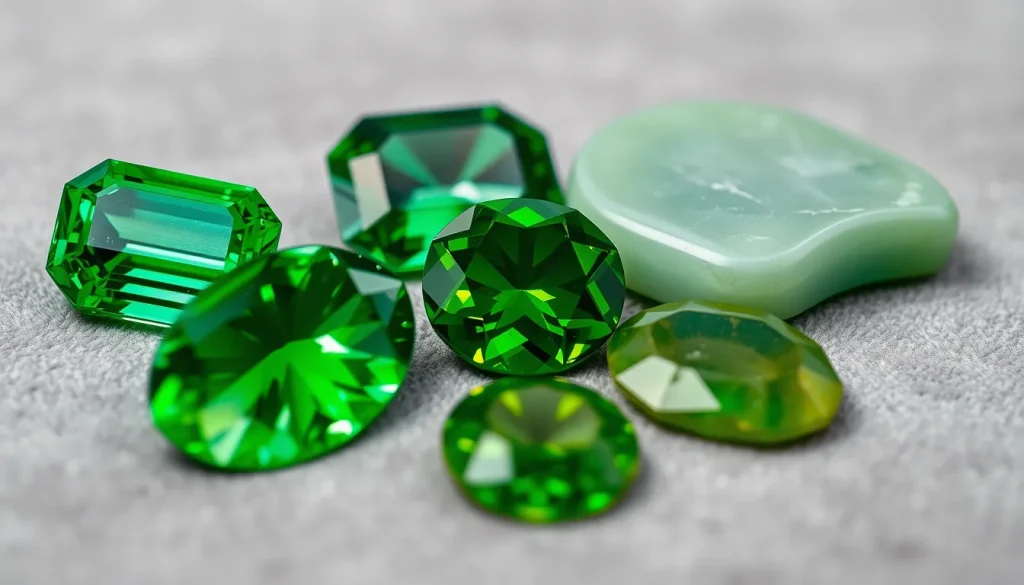
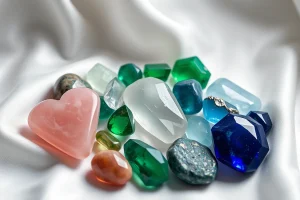
Green gemstones have long been associated with nature, rebirth, and prosperity. From the deep, lush hues of the emerald to the bright, lime-green sparkle of peridot, the spectrum of green in the mineral kingdom is vast and chemically diverse. For the collector or professional, distinguishing between these stones requires a blend of visual analysis and an understanding of mineral physics.
What Is a Green Gemstone?
A green gemstone is any mineral or organic material that exhibits a green hue, typically caused by the presence of specific transition metal ions within the crystal lattice. The most common coloring agents for green stones are chromium, vanadium, and iron. Depending on the combination and concentration of these elements, the resulting color can range from yellowish-green to a deep, saturated forest green.
Varieties and Related Materials
Green gemstones are not a single family but are spread across various mineral groups. They are generally categorized by their rarity, hardness, and chemical composition.
The Precious Greens
- Emerald: A variety of beryl colored by chromium or vanadium. Known for its rich “verdant” color and characteristic inclusions called “jardin”.
- Tsavorite Garnet: A rare grossular garnet colored by vanadium. It often possesses higher brilliance and clarity than emeralds.
- Demantoid Garnet: An andradite garnet known for its exceptional fire (dispersion) and bright green color.
The Semi-Precious and Collector’s Greens
- Peridot: The gem-quality variety of olivine, colored by iron. It is unique for being found in a single, consistent shade of lime green.
- Jade (Jadeite and Nephrite): Two distinct minerals that share the name “Jade”. Jadeite is typically more vivid, while nephrite is often darker and more translucent.
- Tourmaline (Verdelite): A complex borosilicate that can appear in almost any shade of green.
- Green Zircon: A natural zirconium silicate often exhibiting a strong yellowish-green hue.
Identification and Look-Alikes
Identifying green gemstones can be challenging because many different minerals share similar colors. Professionals use a combination of tools to differentiate them.
| Gemstone | Hardness (Mohs) | Key Identifier | Common Look-Alike |
|---|---|---|---|
| Emerald | 7.5 – 8.0 | Three-phase inclusions | Green Tourmaline |
| Peridot | 6.5 – 7.0 | Strong pleochroism | Green Glass |
| Tsavorite | 7.0 – 7.5 | High refractive index | Emerald |
| Jadeite | 6.5 – 7.0 | Granular structure | Chrysoprase |
Expert Tip: When distinguishing between Emerald and Tsavorite, look at the inclusions. Emeralds almost always have visible internal fractures and “gardens,” whereas Tsavorite is typically much cleaner and more transparent.
Treatments and Synthetic Counterparts
Due to the rarity of high-quality green stones, treatments are common. It is essential for buyers to know what has been done to a stone.
- Oiling: Common in emeralds to fill surface-reaching fractures and improve clarity. Cedar oil is the industry standard.
- Irradiation: Used to enhance the color of some green stones, though less common than in blue stones.
- Synthetic Emeralds: Created via the flux-growth or hydrothermal method. They are chemically identical to natural emeralds but lack the natural inclusion patterns.
- Chrome Tourmaline: Often used as a more affordable alternative to emerald.
Jewelry Suitability and Care
The durability of a green gemstone determines its best use in jewelry. Harder stones like emeralds and garnets are suitable for rings, while softer stones require more protection.
- High Durability (Mohs 7+): Emerald, Tsavorite, and Tourmaline are suitable for daily wear in rings and necklaces.
- Moderate Durability (Mohs 6-7): Peridot and Jade should be handled with care; avoid ultrasonic cleaners and harsh chemicals.
- Cleaning: Use lukewarm soapy water and a soft brush. Avoid steam cleaners for oiled emeralds, as the heat can remove the oil.
Symbolism and Modern Beliefs
Across cultures, green gemstones are symbols of life and renewal. In ancient Egypt, peridot was known as the “gem of the sun.” In many Asian cultures, jade is prized more than diamonds, symbolizing purity, longevity, and moral integrity. In modern metaphysical practices, green stones are frequently linked to the Heart Chakra, believed to promote emotional healing and abundance.
FAQ
How can I tell a real emerald from a fake one?
Real emeralds almost always have internal inclusions (jardin). If a stone is perfectly clear and very cheap, it is likely a synthetic or a different green stone like glass or tourmaline. Professional verification via a refractometer is recommended.
Is jadeite the same as nephrite?
No. While both are called 'jade,' they are different minerals with different chemical compositions and hardness. Jadeite is generally rarer and more intensely colored.
Can I wear peridot in an engagement ring?
Yes, but with caution. Peridot has a Mohs hardness of 6.5-7, making it softer than diamonds or sapphires. It is prone to scratching if worn during heavy manual activities.
Leave a Reply