
Short Answer
Definition
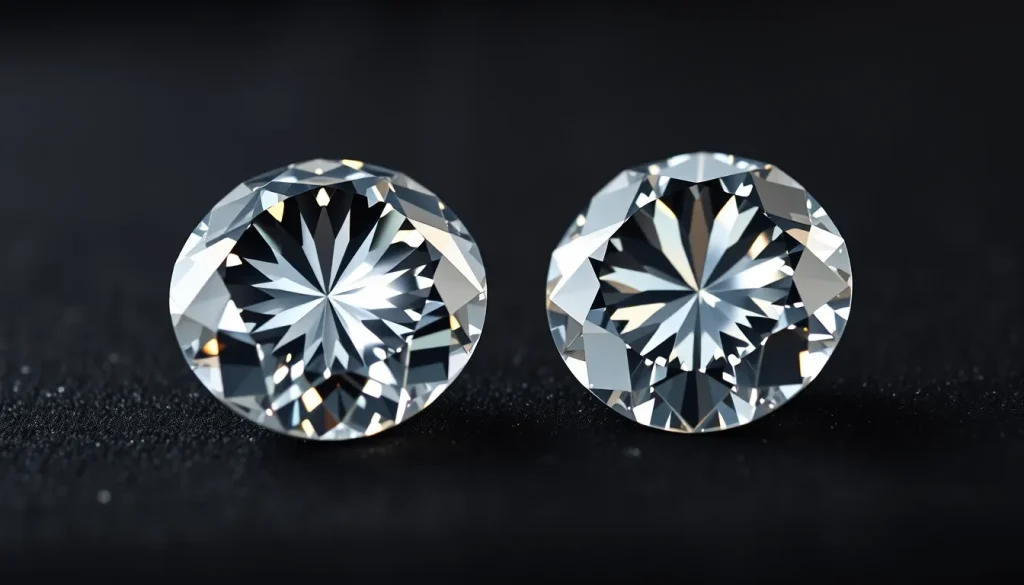
Adamantine luster is a gemological term used to describe a specific type of surface reflection that is exceptionally bright, sharp, and mirror-like. Derived from the Greek word adamas (meaning ‘invincible’ or ‘diamond’), it represents the pinnacle of luster in the mineral kingdom. In practical terms, a gemstone with adamantine luster reflects light with an intensity that creates a brilliant, almost metallic sparkle, even when the stone is not perfectly polished.
Plain-English Explanation
Imagine the difference between the shine of a piece of polished plastic and the blinding flash of a high-quality diamond. While the plastic has a ‘vitreous’ (glass-like) luster, the diamond has an ‘adamantine’ luster. This effect occurs because the gemstone’s internal structure allows it to bend and reflect light more aggressively. When light hits the surface of an adamantine stone, it doesn’t just bounce off; it does so with a level of intensity and clarity that makes the stone appear to glow from within. It is the ‘super-shine’ of the gemstone world.
Example
The most quintessential example of adamantine luster is the Diamond. However, several other gemstones exhibit this quality due to their high refractive indices. Below is a detailed look at gemstones that typically display adamantine or near-adamantine luster:
| Gemstone | Luster Type | Refractive Index (Approx.) | Visual Characteristic |
|---|---|---|---|
| Diamond | Adamantine | 2.417 | Extreme brilliance and fire |
| Moissanite | Adamantine | 2.65 – 2.69 | Higher dispersion than diamond |
| Zircon | Adamantine | 1.92 – 1.98 | Strong, sharp flashes of light |
| Rutile | Adamantine | 2.61 – 2.90 | Metallic-adamantine sheen |
Expert Tip: To distinguish adamantine luster from vitreous luster, observe the stone under a single point light source. An adamantine stone will produce a sharper, more concentrated point of reflection than a glass-like stone.
Why It Matters
Understanding luster is critical for both gemstone identification and valuation for several reasons:
- Authentication: Luster is a primary diagnostic tool. For instance, a fake diamond made of glass will have a vitreous luster, which is noticeably ‘softer’ and less intense than the true adamantine luster of a diamond.
- Value Determination: Generally, gemstones with higher luster are more prized in the jewelry market because they exhibit greater ‘life’ and brilliance when faceted.
- Cut Optimization: Lapidaries (gem cutters) use the knowledge of a stone’s luster and refractive index to determine the ‘critical angle.’ If a stone with adamantine luster is cut too shallow or too deep, the light will leak out the bottom, wasting the stone’s natural brilliance.
- Aesthetic Appeal: The high brilliance associated with adamantine luster is what creates the ‘fire’ (dispersion) and ‘scintillation’ (sparkle) that collectors seek.
FAQ
Is every sparkling gemstone adamantine?
No. Many gemstones sparkle due to a vitreous luster and a good cut. Adamantine luster is a specific, higher intensity of reflection found only in stones with very high refractive indices.
Can a stone's luster change?
Luster is an inherent property of the mineral, but it can be masked by surface scratches, dirt, or poor polishing. Professional polishing can restore the visible luster.
What is the difference between adamantine and metallic luster?
Metallic luster is opaque and reflects light like a polished metal (e.g., pyrite), whereas adamantine luster occurs in transparent or translucent gemstones, allowing light to enter and reflect internally.

Leave a Reply