
Short Answer
Direct Answer
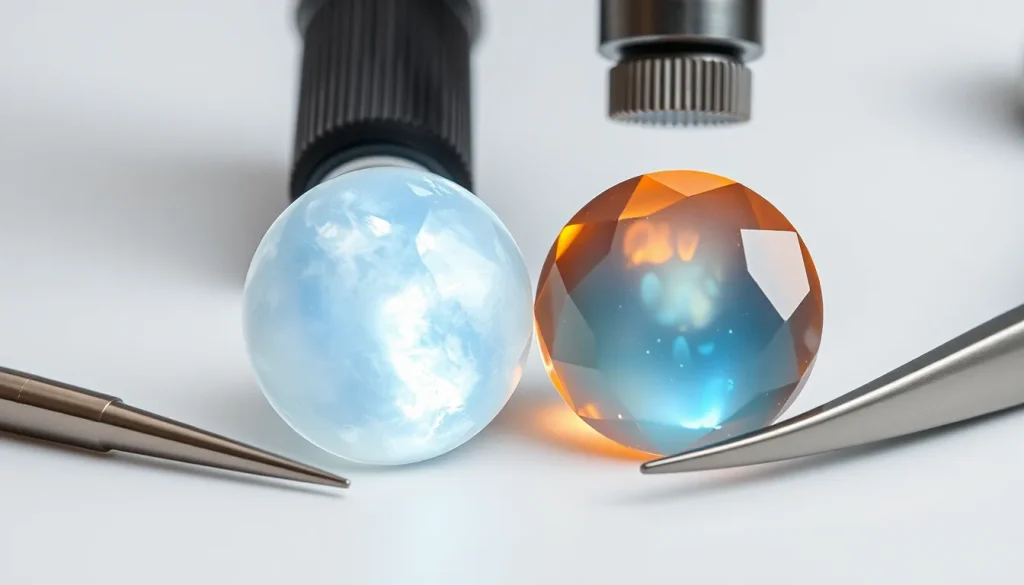
Identifying natural versus heat-treated feldspars—most commonly encountered in moonstone and sunstone—requires analyzing the distribution of color, the nature of the inclusions, and the presence of specific optical phenomena. While natural feldspars possess colors derived from chemical impurities or structural defects during formation, heat-treated stones often exhibit an unnatural uniformity or a specific ‘burnt’ appearance caused by the migration of ions or the oxidation of metallic inclusions during the heating process.
Relevant Conditions
Heat treatment is frequently applied to feldspars to enhance their commercial appeal. In moonstones, heating may be used to intensify color or remove unwanted tints. In sunstones, heating is often used to increase the size and brilliance of the aventurescence (the shimmering effect caused by copper or hematite platelets). The challenge for the gemologist arises when the treatment is subtle, as the chemical composition of the stone remains unchanged, leaving only structural and optical clues behind.
Recommended Steps
To differentiate between natural and treated feldspars, follow these systematic diagnostic steps:
- Examine Color Zoning: Natural feldspars typically show organic color zoning or subtle gradients. Heat-treated stones often display a monochromatic, saturated hue that appears ‘flat’ or overly consistent across the entire crystal.
- Analyze the Aventurescence: In sunstones, observe the metallic platelets. Natural platelets are often irregularly shaped and distributed. Heat-treated stones may show larger, more rounded, or overly concentrated platelets that look artificial under magnification.
- Inspect for ‘Burn’ Marks: Look for tiny, localized areas of discoloration or microscopic fractures that occur when a stone is overheated. These are often visible as dark spots or ‘clouds’ that do not follow the natural growth patterns of the mineral.
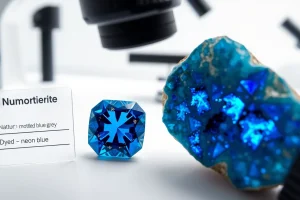
- Observe the Adularescence: For moonstones, check the quality of the glow. Natural adularescence is a result of exsolution lamellae. While heat can enhance this, overly intense or ‘neon’ glows in low-grade material are a red flag for treatment.
Expert Tip: Always use a 10x jeweler’s loupe or a binocular microscope. Look for ‘haloes’ around inclusions; heat treatment can cause elements to migrate away from an inclusion, creating a distinct ring that is never found in nature.
Exceptions
It is important to note that some feldspars undergo natural geothermal heating. Stones that have been heated by volcanic activity over millions of years may show characteristics similar to lab-heated stones but will maintain a geological consistency in their inclusion patterns. Furthermore, some rare varieties of feldspar naturally possess high saturation that can be mistaken for treatment; in these cases, spectroscopic analysis (such as FTIR) is the only definitive way to confirm the origin.

When to Ask a Professional
While visual inspection is a powerful tool, certain scenarios necessitate a certified gemologist:
- High-Value Transactions: When purchasing investment-grade moonstone or rare sunstone.
- Ambiguous Optical Properties: If the stone exhibits colors that are theoretically impossible for its known geographic origin.
- Need for Certification: When a legal document of authenticity is required for insurance or resale.
- Advanced Testing: When the stone requires non-destructive spectroscopic analysis to detect subtle structural changes caused by heat.
FAQ
Does heat treatment lower the value of a feldspar?
Generally, yes. Natural, untreated stones are more highly prized by collectors, though heat-treated stones may be more popular in commercial fashion jewelry due to their vivid colors.
Can I tell if a moonstone is heated just by looking at it?
In many cases, yes. Overly saturated colors or a 'neon' glow in a stone that otherwise looks low-quality often suggest heat treatment.
Is heat treatment permanent in feldspars?
Yes, heat treatment is a permanent structural change and will not reverse over time.
Leave a Reply