
Short Answer
Direct Answer
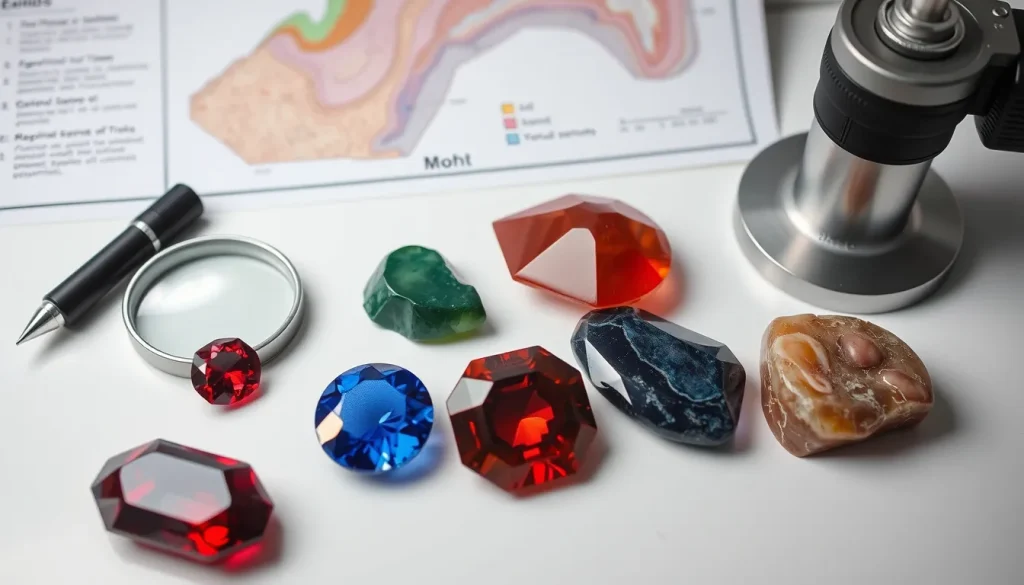
Identifying metamorphic gemstones requires a combination of observing textural markers (how the mineral is arranged) and physical properties (hardness, luster, and color). Metamorphic gemstones are minerals that have been transformed from a pre-existing rock (the protolith) through intense heat, pressure, or chemically active fluids without melting into magma. To identify them, a beginner should look for evidence of foliation (layering), specific crystal habits like the prismatic shape of kyanite, and the high density often associated with high-pressure environments.
Relevant Conditions
Metamorphic gemstones are typically found in specific geological settings, which can provide a clue to their identity. You are most likely to encounter these stones in the following conditions:
- Regional Metamorphism: Large-scale pressure and heat, often associated with mountain building (e.g., Garnets, Kyanite).
- Contact Metamorphism: When hot magma intrudes into existing rock, “baking” the surrounding area (e.g., Andalusite, certain Tourmalines).
- Dynamic Metamorphism: High-stress environments like fault zones where rocks are physically crushed and recrystallized.
Expert Tip: Always consider the “association.” For example, if you find a green garnet alongside kyanite and staurolite, you are likely dealing with a high-grade metamorphic schist.
Recommended Steps
Follow these systematic steps to identify a suspected metamorphic gemstone:
- Examine the Texture: Look for foliation or schistosity. If the stone has a layered or “platy” appearance, it likely originated in a metamorphic environment.
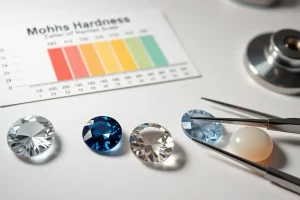
- Test the Hardness: Use the Mohs scale. Metamorphic gems vary wildly; for instance, Ruby (Corundum) is a 9, while Talc is a 1.
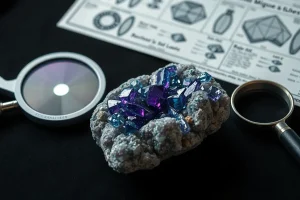
- Analyze the Crystal Habit: Observe the shape. Kyanite often forms long, blade-like crystals, while Garnets typically form dodecahedrons (12-sided crystals).
- Check for Pleochroism: Many metamorphic gems, like Iolite or Kyanite, show different colors when viewed from different angles. This is a key diagnostic feature.
- Compare with a Reference Table: Use the following data to narrow down your specimen:
| Gemstone | Key Visual Marker | Hardness (Mohs) | Common Environment |
|---|---|---|---|
| Garnet | Deep red/brown, equant crystals | 6.5 – 7.5 | Schists/Gneiss |
| Kyanite | Blue, bladed, anisotropic hardness | 4.5 – 7 | Aluminous Schists |
| Jadeite | Interlocking granular texture | 6.5 – 7 | High-pressure zones |
| Ruby/Sapphire | Hexagonal prisms, vivid color | 9 | Marble/Basalt |
Exceptions
Not all stones that look metamorphic are. Be aware of these common pitfalls:
- Igneous Mimics: Some igneous rocks can look layered (like some basalts), but they lack the recrystallized, interlocking grain structure of metamorphic rocks.
- Sedimentary Look-alikes: Siltstones can look like slates, but slates have a distinct “slaty cleavage” caused by metamorphic pressure.
- Synthetic Gems: Lab-grown rubies and sapphires possess the same chemical structure as metamorphic ones but lack the natural inclusions (like rutile needles) found in earth-mined stones.
When to Ask a Professional
While basic identification is possible for hobbyists, you should consult a certified gemologist (GIA or FGA) in the following scenarios:
- High-Value Specimens: If the stone is suspected to be a high-grade Ruby or Emerald.
- Treatment Detection: To determine if a stone has been heat-treated or glass-filled to improve clarity.
- Chemical Verification: When visual markers are inconclusive and X-ray diffraction (XRD) or Raman spectroscopy is required for a definitive ID.
FAQ
Can a gemstone be both igneous and metamorphic?
A gemstone starts as one or the other, but a stone that was originally igneous (like a basalt) can be metamorphosed into something else (like an eclogite) over millions of years.
What is the easiest way to tell if a stone is metamorphic?
Look for foliation or an interlocking crystalline structure that suggests the mineral grew while under intense pressure.

Is diamond a metamorphic gemstone?
While diamonds form under extreme pressure and heat in the mantle, they are typically categorized as igneous/mantle-derived rather than metamorphic in the traditional crustal sense.
Leave a Reply