
Short Answer
Within the vast spectrum of mineralogy, few groups are as chemically intriguing and visually striking as the zinc-manganese arsenates. These minerals typically form in the oxidized zones of hydrothermal ore deposits, where zinc and manganese interact with arsenic-bearing fluids. While not suitable for traditional jewelry due to their fragility, they are highly coveted by mineral collectors for their exceptional crystal habits and vivid hues.
What Is Zinc-Manganese Arsenate?
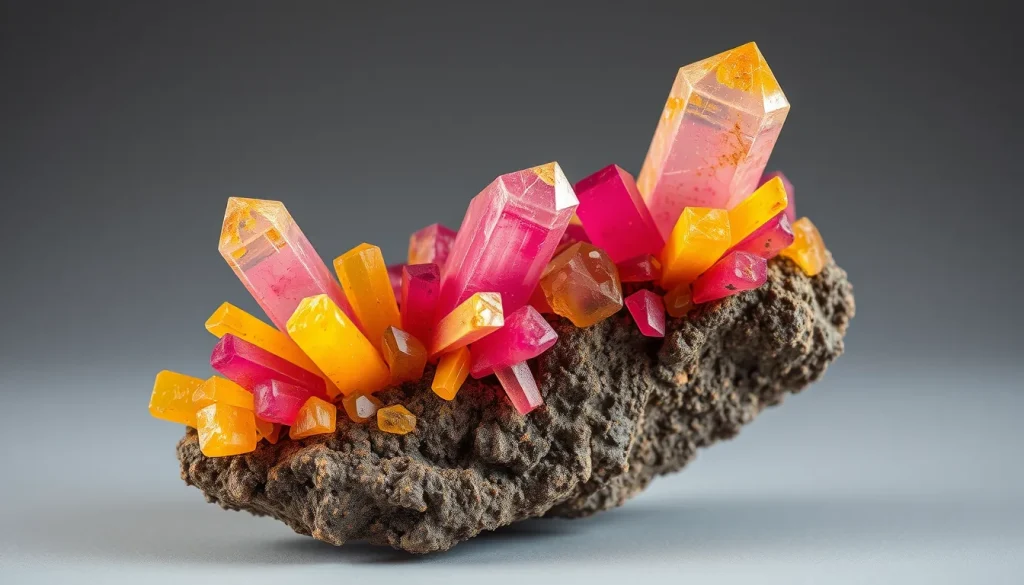
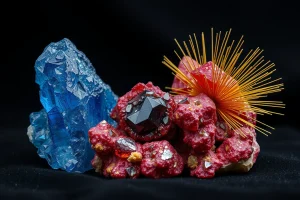
Zinc-manganese arsenates are a group of secondary minerals characterized by the presence of zinc (Zn), manganese (Mn), and arsenic (As) within their chemical structure. The most prominent members of this group often exhibit complex symmetry and a wide range of colors, from deep reds and pinks to vibrant yellows and greens.
These minerals are typically found as small, well-formed crystals on a matrix of other minerals like goethite or quartz. Because arsenic is a key component, these minerals are chemically distinct from the more common silicates or oxides. Their formation requires specific geochemical conditions—specifically, a high concentration of arsenic in an oxidizing environment—which makes their occurrence geographically limited and naturally rare.
Varieties and Related Materials
The zinc-manganese arsenate group encompasses several species, though some are more recognized in the gem and mineral trade than others. The interplay between zinc and manganese often leads to a variety of species depending on the ratio of these metals.
- Olivenite: While primarily a copper arsenate, manganese substitutions can occur, leading to a range of olive-green to brownish colors.
- Mimetite: A lead arsenate that frequently occurs alongside zinc-manganese species, often appearing as bright yellow crystals.
- Adamite: Though primarily a zinc arsenate, manganese-bearing varieties exist, often appearing in striking green or yellow hues.
Gemologist’s Note: It is important to distinguish between these arsenates and other colored minerals. The presence of arsenic often gives these crystals a characteristic vitreous to resinous luster that differs from the adamantine luster of diamonds or the greasy luster of nephrite.
Identification and Look-Alikes
Identifying zinc-manganese arsenates requires a combination of visual inspection and chemical analysis. Due to their rarity, they are often mistaken for more common minerals.
| Feature | Zn-Mn Arsenates | Common Look-Alikes (e.g., Garnets/Tourmalines) |
|---|---|---|
| Hardness | Generally low (3.5 to 5 on Mohs scale) | High (6.5 to 7.5 on Mohs scale) |
| Luster | Vitreous to Resinous | Vitreous to Adamantine |
| Crystal Habit | Often acicular or prismatic | Typically equant or columnar |
| Chemical Nature | Arsenic-based | Silicate-based |
Jewelry Suitability and Care
From a practical gemological standpoint, zinc-manganese arsenates are not suitable for jewelry. Their low Mohs hardness makes them susceptible to scratching, and their chemical composition makes them unstable under certain environmental conditions.
Preservation Guidelines:
- Avoid Sunlight: Many arsenates are photosensitive and can fade or change color when exposed to prolonged UV light.
- Chemical Stability: Avoid contact with strong acids or cleaning agents, which can react with the arsenic and zinc components.
- Storage: Store in lined mineral boxes with low humidity to prevent degradation of the crystal faces.
Quality and Value Factors
For the collector, the value of a zinc-manganese arsenate specimen is determined by several key factors:
- Crystal Integrity: Specimens with sharp, undamaged crystal terminations command the highest prices.
- Color Saturation: Deep, vivid colors that are consistent throughout the crystal are highly prized.
- Matrix Contrast: A specimen where the crystals stand out sharply against a contrasting matrix (e.g., bright yellow crystals on a dark brown limonite matrix) is more valuable.
- Rarity of Locality: Specimens from historic or closed mines are significantly more desirable.
FAQ
Can these minerals be used in rings or necklaces?
No. Due to their low hardness and potential toxicity (arsenic content), they are considered collector's specimens only and are not suitable for wearable jewelry.
Are zinc-manganese arsenates toxic?
While the arsenic is chemically bound within the crystal lattice, it is always recommended to wash your hands after handling raw mineral specimens and to avoid inhaling any dust created by the mineral.
How do I tell them apart from common yellow gems like Citrine?
The most immediate difference is hardness; Citrine (Quartz) is much harder (7 Mohs) and will easily scratch an arsenate mineral. Additionally, the crystal habit of arsenates is typically more acicular or prismatic.
Leave a Reply