
Short Answer
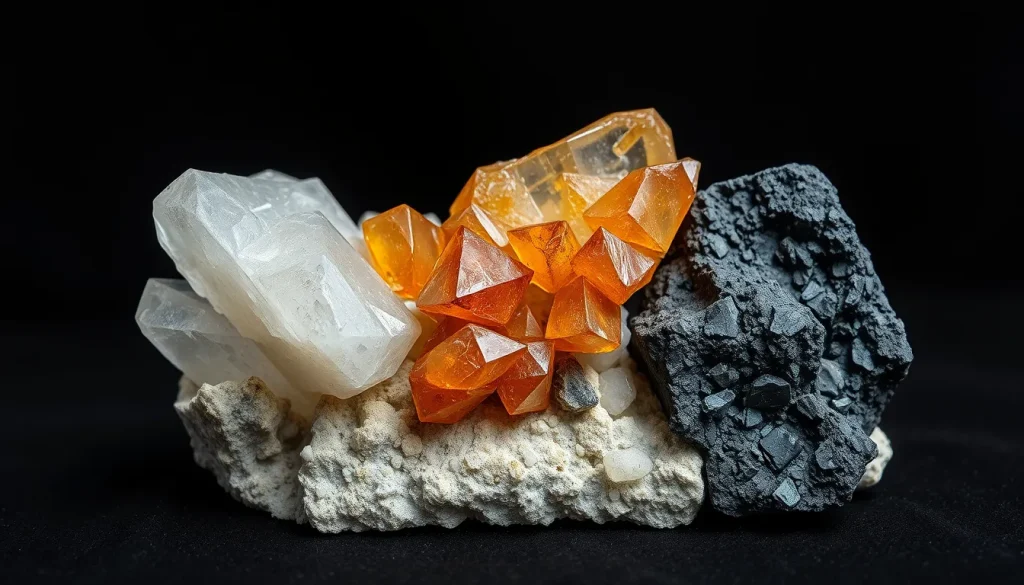
The Mica group consists of a family of phyllosilicate minerals known for their extraordinary basal cleavage, allowing them to be split into incredibly thin, flexible, and sometimes elastic sheets. While not typically used as primary faceted gemstones due to their low hardness, they are highly valued as collectors’ minerals, industrial insulators, and decorative elements in lapidary arts.
What Is Mica?
Micas are complex hydrous aluminum potassium silicates. The term “mica” is derived from the Latin micare, meaning “to glitter,” which describes the brilliant pearly to vitreous luster these minerals exhibit when light reflects off their cleavage planes. From a structural standpoint, they are characterized by a sheet-like arrangement of silica tetrahedra, which creates the distinctive layered morphology.
Varieties and Related Materials
The Mica group is diverse, but three primary species dominate the gemological and mineralogical interest: Muscovite, Phlogopite, and Biotite.
Muscovite
Often referred to as “white mica,” Muscovite is the most common species. It is typically colorless to pale yellow or greenish. In its massive form, it is known as Isinglass. It is prized for its transparency and high electrical resistance.
Phlogopite
Known as “brown mica,” Phlogopite typically occurs in shades of yellow, brown, or golden-green. It is more heat-resistant than Muscovite and is often found in igneous and metamorphic rocks.
Biotite
Biotite is the “black mica,” characterized by its dark brown to black color due to the presence of iron and magnesium. It is the most common mica found in granites and is easily identified by its deep, opaque coloration.
Identification and Look-Alikes
Identifying micas requires a focus on their physical habit and cleavage. The most defining characteristic is the perfect basal cleavage {001}.
| Property | Muscovite | Phlogopite | Biotite |
|---|---|---|---|
| Color | Colorless, Silver, Pale Yellow | Yellow, Brown, Golden | Black, Dark Brown |
| Hardness (Mohs) | 2.0 – 3.0 | 2.0 – 3.0 | 2.5 – 3.0 |
| Transparency | Transparent to Translucent | Translucent to Opaque | Opaque to Translucent |
| Luster | Pearly to Vitreous | Pearly | Vitreous to Pearly |
Micas can be confused with Selenite (Gypsum) or Talc. However, micas are distinguished by their elasticity; if you bend a thin sheet of Muscovite, it will snap back to its original shape, whereas Selenite will remain bent or break.
Practical Uses and Limitations
Due to their low Mohs hardness (2.0–3.0), micas are unsuitable for traditional jewelry settings such as rings or bracelets, as they scratch easily and can delaminate over time.
- Industrial Use: High dielectric strength makes them ideal for electrical insulation.
- Cosmetics: Finely ground mica is used in eyeshadows and highlighters to provide a shimmering effect.
- Collector’s Specimens: Large, well-formed “books” of mica are highly sought after by mineral collectors.
Jewelry Suitability and Care
If mica is used in jewelry, it is typically in the form of cabochons or slices set in protective bezels that prevent the edges from peeling. To maintain these pieces:
Expert Tip: Avoid using ultrasonic cleaners or steam cleaners on mica. The vibration and heat can cause the layers to separate (delaminate), effectively destroying the stone.
Clean only with a soft, dry cloth or a slightly damp microfiber cloth. Avoid all chemicals and acidic cleaners.
FAQ
Can mica be used in rings?
It is not recommended. Mica is too soft (Mohs 2-3) and will scratch or peel quickly under daily wear.
What is the difference between Muscovite and Biotite?
The primary difference is color and composition; Muscovite is colorless/silver and lacks iron, while Biotite is dark brown/black due to high iron and magnesium content.
Is mica the same as lepidolite?
Lepidolite is a lithium-rich mica. While it belongs to the same general family, it is distinct from the Muscovite, Phlogopite, and Biotite species.
Leave a Reply