
Short Answer
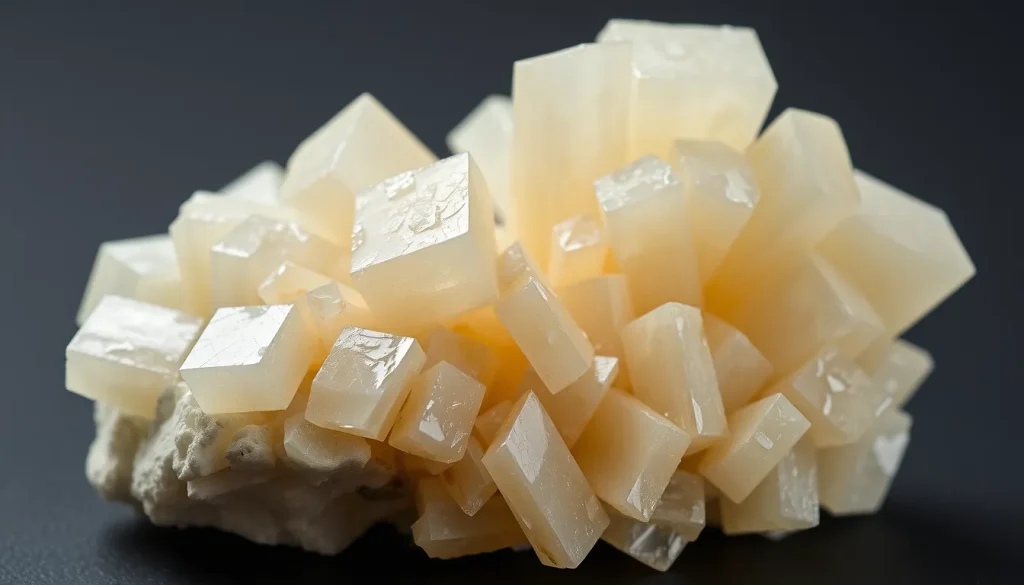
Baryte, named from the Greek word barus meaning ‘heavy,’ is the most significant mineral species of the barium sulfate group. Distinguished by its remarkably high specific gravity for a non-metallic mineral, it serves as the primary ore of barium and is found in a wide array of geological environments, from hydrothermal veins to sedimentary deposits.
What Is Baryte?
Baryte is a sulfate mineral with the chemical formula BaSO₄. It crystallizes in the orthorhombic system and is most famous among geologists and collectors for its density. While many minerals are heavy due to metallic content, baryte achieves its weight through the high atomic mass of barium combined with a tight crystalline structure.
In its purest form, baryte is colorless or white, but impurities frequently introduce colors ranging from pale yellow and brown to red. Rare specimens may exhibit a creamy or greyish hue. Its most defining physical characteristic is its streak, which is consistently white, regardless of the mineral’s external color.
Varieties and Related Materials
Baryte manifests in several distinct habits and varieties, which often dictate its value to collectors and its utility in industry:
- Tabular Crystals: The most common form, appearing as thick, plate-like crystals often found in clusters.
- Bladed Baryte: Crystals that form elongated, blade-like structures, sometimes creating “desert rose” style aggregates.
- Fibrous or Massive Baryte: Occurs as dense, featureless masses or radiating fibrous needles, often associated with sedimentary limestone.
- Micaceous Baryte: A variety where the crystals are so thin they resemble mica flakes, allowing for easy cleavage.
Identification and Look-Alikes
Identifying baryte requires a combination of physical tests. Because it is often confused with other white or colorless minerals, the following markers are essential:
| Property | Baryte (BaSO₄) | Celestine (SrSO₄) | Calcite (CaCO₃) |
|---|---|---|---|
| Specific Gravity | Very High (~4.5) | Moderate (~3.9) | Low (~2.7) |
| Hardness (Mohs) | 3.0 – 3.5 | 3.0 – 3.5 | 3.0 |
| Acid Reaction | None | None | Strong Effervescence |
| Common Color | White/Yellow/Brown | Pale Blue | Clear/White/Various |
Expert Tip: The “heft test” is the most reliable field method for baryte. If a white, non-metallic mineral feels unexpectedly heavy for its size, it is highly likely to be baryte.
Practical Uses and Limitations
While not typically used as a gemstone due to its low hardness and cleavage, baryte is indispensable in several industrial sectors:
Industrial Applications
- Drilling Mud: Due to its high density and chemical inertness, baryte is added to drilling fluids in oil and gas exploration to prevent “blowouts” by balancing high-pressure underground gas and oil.
- Radiology: Barium sulfate is used as a contrast agent in medical imaging (the “barium meal”) because it is opaque to X-rays and non-toxic when ingested.
- Paint and Glass: It serves as a filler and pigment extender in paints and as a clarifying agent in glass manufacturing.
Limitations
Baryte is unsuitable for jewelry. Its Mohs hardness of 3-3.5 makes it prone to scratching, and its perfect cleavage means it can split easily along specific planes, making it fragile under mechanical stress.
Quality and Value Factors
For the mineral collector, the value of baryte is determined by three primary factors:
- Crystal Definition: Sharp, well-formed tabular crystals with distinct edges are far more valuable than massive or earthy varieties.
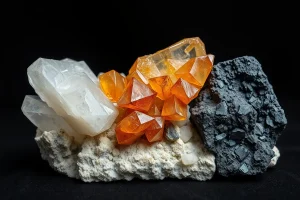
- Color Rarity: While white is common, deep amber or rare reddish-brown specimens command higher prices.
- Association: Specimens where baryte is grown alongside other minerals (such as fluorite or quartz) are highly prized for their aesthetic contrast.
FAQ
Is Baryte toxic?
In its mineral form as barium sulfate, it is virtually insoluble in water and not toxic, which is why it is used safely in medical X-ray contrast agents.
How can I tell Baryte apart from Calcite?
The simplest way is the acid test; Calcite will fizz (effervesce) when exposed to dilute hydrochloric acid, whereas Baryte will not react.
Can Baryte be used in jewelry?
Generally, no. It is too soft (3-3.5 Mohs) and has a tendency to cleave, making it unsuitable for rings or wearable jewelry.
Leave a Reply